Opinion: Bilawal’s Lahore Visit: Catalyst for Change or Another Stagnant Session?
PPP, Punjab, Bilawal Bhutto Zardari
By Junaid Qaiser
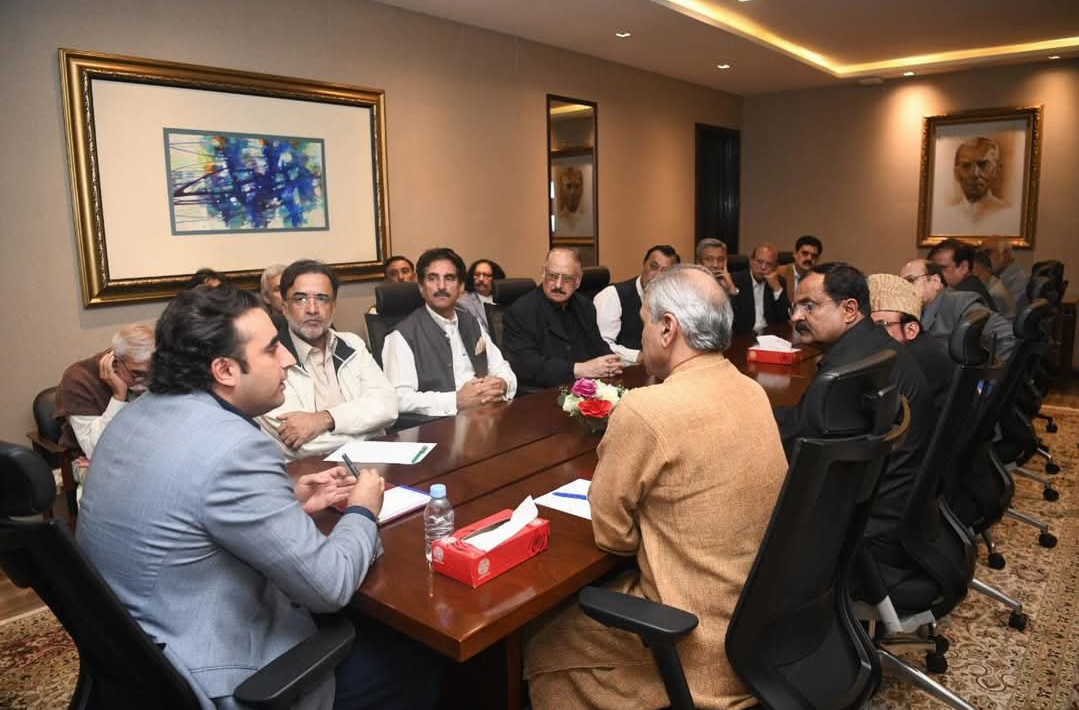
Chairman Bilawal Bhutto Zardari’s upcoming visit to Lahore and the scheduled party meeting on January 20 offer a critical juncture for the Pakistan People's Party (PPP). With discussions on Punjab’s organizational structure and political strategies on the agenda, this could be an opportunity for meaningful reform. However, history suggests skepticism is warranted, as similar efforts in the past have yielded little or no progress.
A Decaying Foundation
The PPP's challenges in Punjab stem from entrenched patterns that have become increasingly problematic. Despite repeated visits and promises, the party has failed to modernize its organization or activate its base in the province. The reasons for this stagnation are glaring: an outdated leadership model, an insular decision-making process, and a refusal to adapt to changing political dynamics.
The same group of senior leaders who dominated Punjab’s politics decades ago continue to hold sway. While their experience particulary in their constituencies is valuable, their perspectives are often disconnected from contemporary realities. The chairman’s repeated engagement with senior leaders, many of whom have been in their senior party leader status for over two decades, reveals a troubling disconnect. These leaders, primarily from rural areas, lack the insights and strategies required to resonate with Punjab’s increasingly urbanized and youthful electorate.
The current leadership’s outdated perspectives, rooted in political trends of the last century, hinder the party’s ability to adapt. Their resistance to embracing new knowledge, technologies, and political ideologies reflects a deeper institutional inertia that continues to stifle the PPP’s growth in the province.
A Closed Circle
One of the most troubling aspects of Bilawal Bhutto Zardari’s leadership in Punjab is his limited engagement with fresh voices. His meetings are dominated by a select few who, fearing the loss of their influence, actively block new faces from entering the fold. This tight-knit circle not only stifles innovation but also prevents the PPP from tapping into the energy and ideas of younger, urban populations.
This insular approach has also alienated many old workers who were once the backbone of the party, particularly those sidelined after Benazir Bhutto's assassination. These loyalists, now disillusioned, have either distanced themselves from party activities or abandoned the PPP altogether?
The Need for Modernization
The PPP’s failure to adapt to the modern political landscape is a fundamental problem. In an era of artificial intelligence, social media, and data-driven political strategies, the party’s reliance on traditional methods is a recipe for irrelevance. Across the globe, political success is increasingly defined by ideologies backed by robust narratives, disseminated through cutting-edge technology.
To remain competitive, the PPP must overhaul its organizational structure in Punjab. This includes embracing younger leaders, creating think tanks to craft and refine its ideology, and empowering allied-wings to engage with diverse voter bases. Merely shuffling the same old faces and recycling outdated strategies will lead to further decline.
This organizational stagnation particularly affects the party's ability to engage with urban, educated voters who seek sophisticated policy solutions and meaningful ideological discourse.
If the chairman continues to operate within this echo chamber, the PPP risks alienating a younger, urban demographic that demands modern solutions and a progressive vision. The party’s failure to connect with these voters is particularly glaring in a province where political trends are increasingly shaped by urbanization, digital connectivity, and youth activism.
Revival or Another Exercise in Futility?
Bilawal Bhutto Zardari faces a choice. He can either continue with his current approach—limited engagement, superficial reforms, and reliance on a decaying foundation—or he can seize this moment to genuinely transform the PPP in Punjab. The latter will require courage, inclusivity, and a willingness to disrupt the status quo.
Failure to act decisively will have dire consequences. The PPP risks becoming a relic of the past in the province, unable to compete in the rapidly evolving political landscape. The chairman must understand that meaningful change cannot be achieved through half-hearted measures or by clinging to the comfort of familiar faces.
To revitalize its presence in Punjab, the PPP needs comprehensive reform. This could include integrating younger leaders with fresh perspectives, establishing policy research centers to develop modern solutions, and strengthening its organizational structure at the grassroots level. Most importantly, the party must develop new narrative while adapting its message for contemporary audiences.
Bilawal's Lahore visit represents both an opportunity and a challenge. The outcome may well determine whether the PPP can reclaim its historical significance in Punjab or faces further marginalization in this crucial battleground. The choice between transformation and stagnation lies with the party leadership, and the clock is ticking.
As the world moves forward the PPP must decide whether it will move with it—or be left behind. For the PPP to thrive rather than merely survive in Punjab, it must embrace change while honoring its democratic progressive legacy. The question remains: Will Bilawal's upcoming meetings signal the beginning of such transformation, or will they become another missed opportunity in the party's recent history?