
Editorial: The PPP's Enduring Commitment to Labour Rights and Economic Justice
Chairman Bilawal Bhutto Zardari's message thoughtfully connects present commitments to the party's remarkable historical legacy on labour rights.
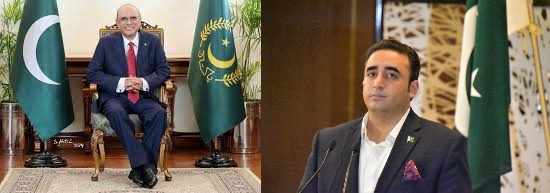
As Pakistan commemorates International Labour Day 2025, the messages from President Asif Ali Zardari and PPP Chairman Bilawal Bhutto Zardari illuminate not only the significance of this day but also represent a powerful continuation of the party's historic relationship with the working class. Their statements, delivered with conviction and clarity, deserve deeper reflection as they chart a path forward for labour rights in Pakistan.
President Zardari's message opens with a profound acknowledgment that resonates across Pakistan's labour landscape: workers are not merely participants in our economy but its very foundation. By recognizing labourers as "the driving force of our economy and national development," the President elevates their status beyond statistical economic units to essential contributors worthy of dignity and recognition.
This recognition is particularly significant coming from the head of state. When President Zardari states, "Our workers are our pride, and we owe our national development to their hard work and contributions," he transforms Labour Day from a symbolic observance into a genuine national moment of gratitude and reflection.
Chairman Bilawal Bhutto Zardari's message thoughtfully connects present commitments to the party's remarkable historical legacy on labour rights. The Chairman's careful chronicling of the PPP's labour achievements across generations—from Zulfikar Ali Bhutto's constitutional protections for unionization and creation of the EOBI, to Benazir Bhutto's immediate release of imprisoned union representatives, to President Zardari's removal of anti-labour constitutional provisions—represents not merely political messaging but a documented record of consistent action.
This multi-generational commitment to labour rights demonstrates that the PPP's relationship with workers transcends electoral cycles or political expediency. Instead, it represents a core value system embedded in the party's DNA since its founding. The Chairman's statement that "Since its founding, the PPP has stood shoulder to shoulder with the labour class" is substantiated by concrete historical examples that few political parties in Pakistan can match.
What distinguishes both messages is their forward-looking approach to labour issues. President Zardari demonstrates remarkable insight by highlighting skill development as "the key to securing a brighter future for our youth and workers" in a rapidly evolving global economy. This focus on future-readiness shows an understanding that labour rights in the 21st century must extend beyond traditional protections to include equipping workers for technological and economic transitions.
Similarly, Chairman Bilawal's emphasis on modernizing labour laws "to reflect the realities of the digital age" shows an understanding that labour frameworks must evolve alongside economic structures. His highlighting of the Benazir Mazdoor Card—providing healthcare, education, marriage grants, financial support, and scholarships—demonstrates the PPP's commitment to comprehensive social protection systems rather than piecemeal interventions.
Perhaps most importantly, both leaders frame labour issues as requiring collective action across sectors. President Zardari's call upon "governments, private enterprises, educational institutions, and civil society to collaborate" reflects an understanding that labour challenges require multi-stakeholder approaches rather than government intervention alone.
This collaborative framework represents a sophisticated approach to governance that recognizes the interconnected nature of modern economies. By urging various sectors to "join hands in creating a just labour ecosystem," the President establishes labour welfare as a shared national responsibility rather than a partisan political issue.
Chairman Bilawal's specific reference to Sindh's labor legislation—"No province can match the pro-labour legislation passed by the Sindh Assembly"—highlights the party's ability to translate principles into governance. The Benazir Mazdoor Card system demonstrates how technological innovation can be harnessed to deliver tangible benefits to workers, serving as a potential model for other provinces and potentially the federal government.
This provincial success story provides a concrete example of what comprehensive labour protection can look like in practice, moving beyond rhetorical commitments to demonstrable outcomes for workers.
As we reflect on International Labour Day 2025, the complementary messages from President Zardari and Chairman Bilawal Bhutto Zardari remind us that labour rights are inseparable from national development. Their vision recognizes that workers' dignity, fair compensation, and social protection are not merely moral imperatives but essential foundations for sustainable economic progress.
The PPP's consistent championing of labour from Zulfikar Ali Bhutto to the present leadership represents a rare political continuity in Pakistan's often fragmented political landscape. As Chairman Bilawal powerfully concludes, "Our workers are the backbone of our economy and nation. The PPP will always stand with them, in struggle and in service." This commitment, if fully realized, promises not just better conditions for workers but a more equitable and prosperous Pakistan for all.
No comments yet.