
Bilawal Bhutto Zardari: A Statesman’s Poise in Tense Times
PPP Chairman has consistently demonstrated a commitment to dialogue over division, cooperation over conflict, and principles over posturing.
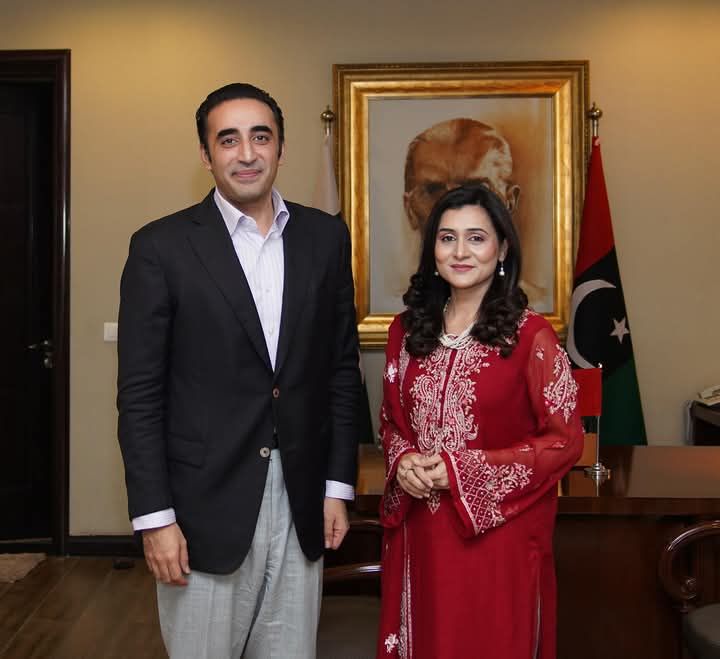
By Sania Kamran
In an era where international relations are increasingly defined by inflammatory rhetoric and knee-jerk reactions, Pakistan's Bilawal Bhutto Zardari has emerged as a rational voice of measured diplomacy. As tensions between Pakistan and India continue to simmer, the Pakistan People's Party (PPP) Chairman has consistently demonstrated a commitment to dialogue over division, cooperation over conflict, and principles over posturing.
The statecraft displayed by Bhutto Zardari represents a notable departure from the heated exchanges that have historically characterized Pakistan-India relations. In his recent interviews with international media, he has maintained a position that is simultaneously firm on Pakistan's core interests and remarkably open to collaborative solutions.
What distinguishes his approach is how he frames complex issues. When addressing terrorism—a topic that typically provokes accusatory rhetoric from both sides—he has recast it as a shared adversary requiring joint action. "We want to combat terrorism... [and] we can only work together to combat terrorism," he emphasized to Deutsche Welle, rejecting the familiar pattern of mutual blame in favor of a unified front against extremism.
This perspective reflects a sophisticated understanding that security challenges transcend borders. By positioning terrorism as a common enemy rather than a political wedge, Bhutto Zardari offers a framework where cooperation becomes possible even amid deep bilateral mistrust.
Perhaps most striking in Bilawal Bhutto Zardari's diplomatic arsenal is his persistent appeal to international law and established agreements. When discussing the contentious Kashmir issue, he invokes the Shimla Accord and UN resolutions not merely as talking points but as legitimate foundations for progress. Similarly, on water security concerns, he grounds Pakistan's position in the Indus Waters Treaty—emphasizing rights within established legal frameworks rather than threats outside them.
This approach serves multiple purposes. It signals to international observers that Pakistan seeks resolution through recognized channels, not unilateral action. It reminds domestic audiences that their country's claims have legitimate standing. And critically, it creates space for dialogue by establishing common reference points with India.
The April 2025 Pahalgam massacre presented a crucial test of this commitment to legal mechanisms. Rather than allowing the tragedy to become another cycle of accusation, Bhutto Zardari offered Pakistan's participation in an impartial investigation—prioritizing truth-finding over political advantage.
Leading in times of national emotion requires walking a delicate line. Too much restraint can appear as weakness; too much passion can close doors to resolution. Bhutto Zardari has demonstrated remarkable skill in navigating this tension.
His statement regarding the Indus River—"Either our water will flow through it, or their blood"—addressed deep domestic concerns about water security while immediately contextualizing it within international norms that "forbid obstructing water" even during conflict. This balanced approach acknowledges legitimate grievances while channeling them toward institutional solutions rather than escalation.
Similarly, his consistent emphasis on the rights of Kashmiris is paired with practical pathways toward engagement. When he notes that India's actions in August 2019 made dialogue "incredibly difficult," he places responsibility on India to create space for talks by stepping back from "extremist positions"—yet he frames this as an opportunity for both nations to move forward rather than an insurmountable obstacle.
Perhaps most promising in Bhutto Zardari's approach is his emphasis on generational change. His observation that younger South Asians "are not carrying the baggage of the past as much" suggests a forward-looking vision where historical grievances need not determine future relations.
This perspective enables him to maintain principled positions on core issues while projecting confidence that peaceful resolution remains possible. It acknowledges the legitimacy of national concerns without accepting perpetual hostility as inevitable.
The diplomatic course charted by Bilawal Bhutto Zardari offers important lessons for navigating complex regional tensions. By consistently prioritizing dialogue, appealing to international norms, and balancing national interests with practical cooperation, he demonstrates that patriotism need not come at the expense of pragmatism.
Whether this approach will yield concrete progress remains to be seen. Meaningful change requires reciprocal efforts from both Pakistan and India. However, by modeling a form of leadership that values investigation over accusation, consultation over confrontation, and process over provocation, Bilawal Bhutto Zardari has at minimum expanded the realm of diplomatic possibility in a region too often constrained by historical animosities.
In a world increasingly characterized by polarization, such nuanced leadership—patriotic yet pragmatic, emotionally attuned yet legally grounded—offers a template for addressing complex conflicts without surrendering core principles or inflaming tensions. It suggests that even amid the most entrenched conflicts, there remain paths toward constructive engagement for those with the courage and vision to pursue them.
No comments yet.