
Flag-bearer of National Unity: Bilawal Bhutto Zardari's Stance Against Indian Aggression
“The people of Pakistan are courageous. We will stand up to India, and on the border our armed forces will give them a befitting response.”
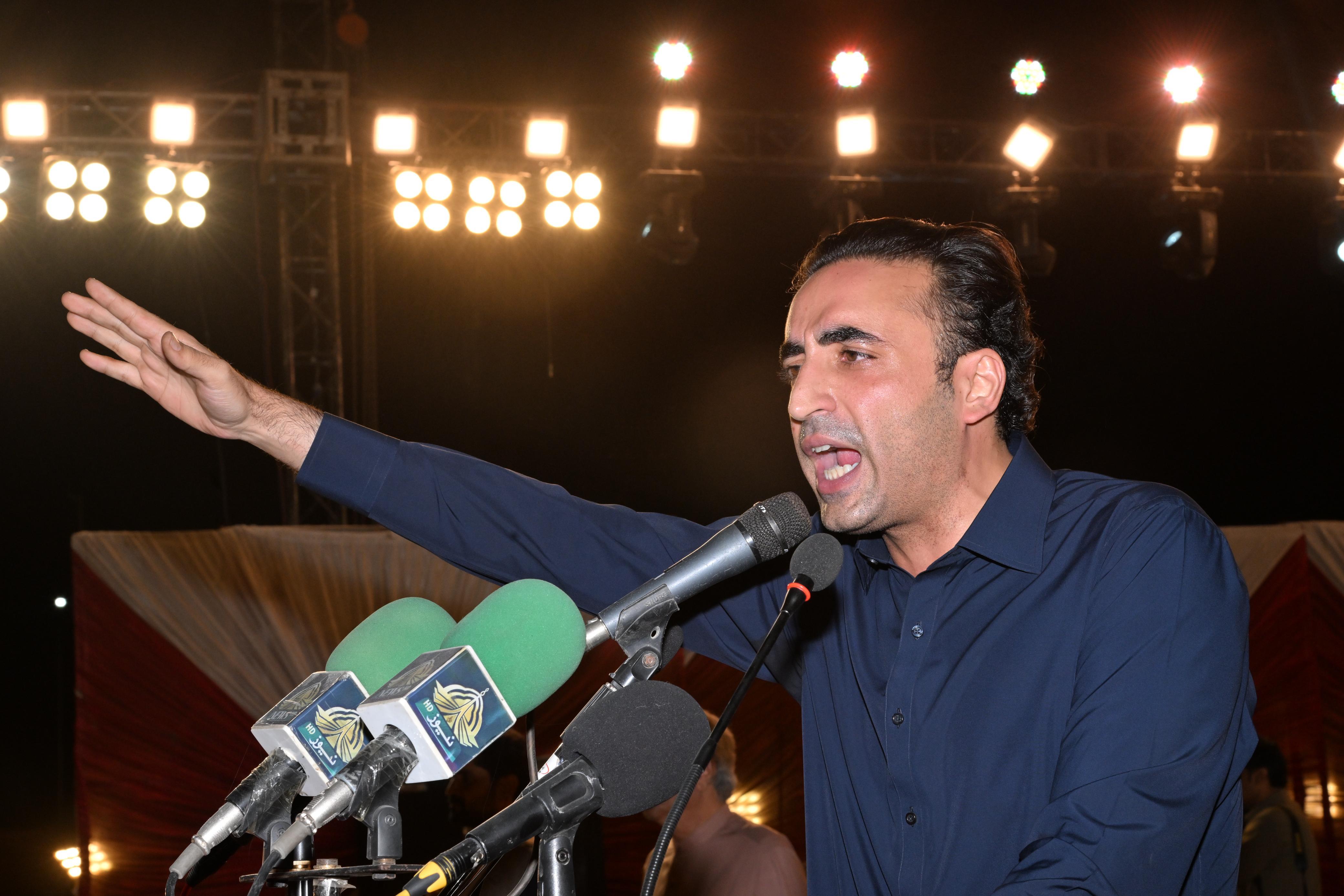
In times of national crisis, true leadership emerges through decisive action, strategic foresight, and the ability to unite diverse stakeholders around common interests. The recent developments concerning Pakistan's water resources, particularly the Indus River, have provided a stage for Chairman Pakistan Peoples Party (PPP) Bilawal Bhutto Zardari to demonstrate exactly these qualities. His recent address at a massive public gathering in Sukkur reveals much about his political maturity and commitment to safeguarding Pakistan's vital interests.
Bilawal's leadership has achieved what many considered impossible—securing a formal agreement ensuring that no new canals will be constructed from the Indus River without consensus in the Council of Common Interests (CCI). This represents a significant shift in policy approach, moving away from simple majority-based decisions toward a model that requires genuine consensus among all provinces. The importance of this achievement cannot be overstated in a country where inter-provincial water disputes have historically been sources of tension and division.
What makes this victory particularly noteworthy is the process through which it was secured. Rather than resorting to divisive tactics, the PPP under Bilawal's guidance engaged in a peaceful struggle that eventually convinced the federal government to adopt this new approach. This demonstrates a sophisticated understanding of how democratic pressure can effect meaningful change without destabilizing the broader political system.
The agreement between PPP and PML-N, bearing the signatures of leaders from both parties, institutionalizes this principle as official government policy. By working constructively with Prime Minister Shehbaz Sharif while firmly representing the interests of his constituents, Bilawal has shown a level of political acumen that belies his relative youth in Pakistan's political landscape.
Even as Pakistan resolves internal questions about water distribution, a potentially more serious challenge has emerged on the international front. India's unilateral decision to suspend the Indus Waters Treaty represents a direct threat to Pakistan's water security and, by extension, its national security.
Bilawal's response to this provocation has been both forceful and measured. His declaration that "The Indus River is ours and will remain ours—either our water will flow through it, or their blood" communicates an unwavering commitment to defending Pakistan's water rights while signaling to domestic audiences that their leadership will not capitulate in the face of external pressure.
At the same time, Bilawal has placed this conflict within a broader context, noting that India's action follows a terrorist incident in Indian Illegally Occupied Jammu and Kashmir (IIOJK) which New Delhi has used as a pretext to escalate tensions with Pakistan. By highlighting this sequence of events, he effectively exposes the opportunistic nature of India's decision while reaffirming Pakistan's stance against terrorism.
Perhaps most importantly, Bilawal has used this moment to call for national unity, urging Pakistanis across all provinces to stand together against this external threat. His statement that "The people of Pakistan are brave—we will stand up to India with full force" represents not just defiance but an appeal to patriotism that transcends regional and partisan divides.
This call for unity extends to support for the federal government's stance, with Bilawal explicitly stating that the PPP stands with Prime Minister Shehbaz Sharif on the issue. This demonstration of solidarity in foreign affairs, even while maintaining distinct positions on domestic issues, reflects a mature understanding of statesmanship.
Bilawal has also wisely emphasized the international dimensions of this dispute, noting that India's unilateral abrogation of the treaty "will neither be accepted at the international level nor by the people of Pakistan." This framing seeks to internationalize the issue, potentially bringing diplomatic pressure to bear on India to reverse its decision.
Throughout his address, Bilawal connected the current struggle to protect water rights with the PPP's historical commitment to democratic values and provincial autonomy. By paying tribute to party workers who took to the field in opposition to the controversial canal project, he reinforced the narrative that change comes through organized grassroots action rather than top-down edicts.
His promise to continue the struggle until India withdraws its unilateral decision demonstrates a commitment to sustained action rather than mere rhetoric. The announcement of a forthcoming public gathering in Mirpurkhas suggests that Bilawal intends to maintain public momentum on this issue, recognizing that diplomatic efforts are strengthened by visible popular support.
In navigating these complex domestic and international waters, Bilawal Bhutto Zardari appears to be stepping fully into his role not just as a party chairman but as a national leader with a clear vision for Pakistan's future. His approach combines the passionate advocacy expected of an opposition leader with the pragmatic cooperation necessary for effective governance.
The dual challenges of internal water distribution and external threats to water security have provided Bilawal with an opportunity to demonstrate his leadership capabilities on issues that transcend partisan politics. His success in securing consensus on the domestic front while articulating a strong position on the international stage suggests that he is increasingly comfortable operating at this level.
As Pakistan continues to face these intertwined challenges, the country will benefit from leadership that can balance firm principle with practical cooperation, passionate advocacy with strategic restraint, and regional interests with national unity. Based on his recent actions and statements, Bilawal Bhutto Zardari is positioning himself as precisely such a leader.

Bhutto,s Proud 🦚 of Pakistan.