
Thailand-Cambodia Relations Reach New Heights on 75th Anniversary of Diplomatic Ties
Prime Minister Paetongtarn Shinawatra's Historic Visit Strengthens Strategic Partnership
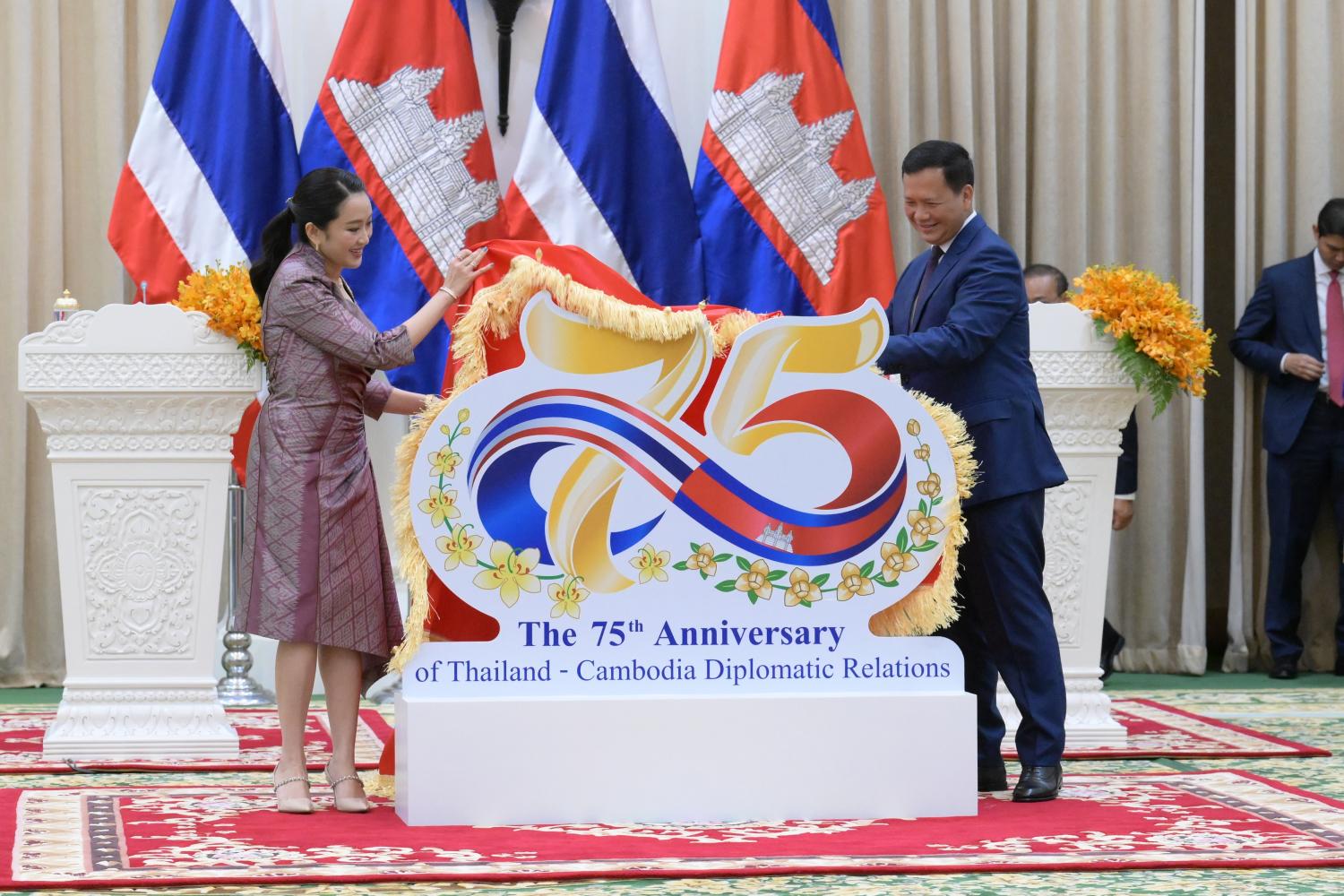
PHNOM PENH, Cambodia — Thai Prime Minister Paetongtarn Shinawatra's recent two-day official visit to Cambodia has marked a significant milestone in the relationship between the two Southeast Asian neighbors, coinciding with the 75th anniversary of their diplomatic relations. The visit has not only reinforced existing ties but also paved the way for expanded cooperation across multiple sectors.
A Ceremonial Welcome Befitting Historic Relations
Prime Minister Paetongtarn, traveling with her husband Pitaka Suksawat, arrived in Cambodia at the invitation of Cambodian Prime Minister Hun Manet. The delegation received a grand reception at Phnom Penh International Airport, where Cambodia's Minister of Commerce Cham Nimul personally welcomed the Thai delegation. The ceremonial aspects of the visit continued with a formal reception at the Peace Palace, attended by Prime Minister Hun Manet and First Lady Pich Chanmony, underscoring the importance Cambodia places on its relationship with Thailand.
Strategic Partnership Enters New Era
During their extensive bilateral discussions, both leaders expressed their commitment to enhancing the strategic partnership established last year. Prime Minister Hun Manet characterized the visit as turning "a new, historic page" in the enduring friendship between Cambodia and Thailand.
"We aimed to promote cooperation in all sectors and drive more intimate exchanges between our peoples, especially after we raised bilateral ties to the level of strategic partnership last year," Hun Manet stated during the joint press conference, highlighting Thailand's critical role as a partner in trade and investment for Cambodia.
Comprehensive Collaboration Framework
The high-level meetings yielded substantial progress across multiple domains of bilateral cooperation:
Tourism and Regional Connectivity
Both nations renewed their commitment to the innovative "Two Kingdom, One Destination" framework, designed to boost tourism and strengthen connectivity between Cambodia and Thailand. This initiative promises to enhance the flow of visitors between the countries while streamlining cross-border travel experiences.
Cultural Heritage Preservation
In a gesture of profound cultural significance, Hun Manet expressed gratitude for Thailand's return of 20 ancient Khmer artifacts that had been looted from Cambodian temples during periods of conflict. "All these artifacts are now not only priceless antiques but also the souls of the Cambodian ancestors which have been lost for years due to the devastating war," the Cambodian premier remarked, highlighting the emotional and historical importance of this repatriation.
Enhanced Security Cooperation
Both leaders agreed to strengthen their nations' collaboration on security matters, with specific focus on:
- Combating sophisticated transnational criminal networks
- Fighting the growing threats of online scams and disinformation campaigns
- Addressing human trafficking across their shared border
- Enhancing military cooperation and coordination in border areas
Diplomatic Expansion
The leaders welcomed initiatives to establish new diplomatic missions—a Thai consulate in Siem Reap and a Cambodian consulate in Songkhla—which will further facilitate bilateral relations, trade, and people-to-people connections.
Environmental Stewardship
Acknowledging shared environmental challenges, the discussions included joint efforts to address air pollution and other environmental issues affecting both nations, recognizing that environmental cooperation is essential for sustainable development in the region.
Formalizing Enhanced Cooperation
The visit saw the prime ministers presiding over the signing ceremony of seven comprehensive cooperation agreements and memoranda of understanding between Cambodia and Thailand. These formal agreements solidify both nations' commitment to expanded collaboration across multiple sectors.
Potential for Further Elevation in Relations
In a separate meeting with Prime Minister Paetongtarn, former Cambodian Prime Minister Hun Sen suggested that the current "strategic partnership" should be elevated to a "comprehensive strategic partnership" given the extensive scope and depth of cooperation between the two neighboring countries.
Personal Connections Enhancing Diplomatic Ties
Prime Minister Paetongtarn noted the unique personal connection between herself and Hun Manet, as both are children of influential former prime ministers—her father Thaksin Shinawatra and Hun Manet's father Hun Sen. She characterized Hun Manet as a "good brother," suggesting that these personal relationships have fostered a more productive diplomatic environment.
Regional Integration and Cooperation
Hun Sen recommended strengthening economic and trade ties both bilaterally and through regional frameworks such as ACMECS (Ayeyawady-Chao Phraya-Mekong Economic Cooperation Strategy), GMS (Greater Mekong Subregion), ASEAN, and RCEP (Regional Comprehensive Economic Partnership). This multilayered approach aims to diversify markets and address challenges posed by global geopolitical and economic competition.
Expert Analysis of Bilateral Relations
Chheng Kimlong, President of the Asian Vision Institute, observed that Cambodia and Thailand are "natural partners and good neighbors," highlighting that stronger economic, trade, investment, political, and cultural ties serve both countries' national interests.
"The visit of Thai Prime Minister Paetongtarn Shinawatra will further deepen and expand the scope and scale of cooperation," Kimlong stated, while emphasizing that maintaining healthy bilateral relations requires "a high level of political trust and integrity" between the two nations.
Looking Toward a Shared Future
As Cambodia and Thailand celebrate 75 years of diplomatic relations with commemorative activities throughout the year, Prime Minister Paetongtarn's official visit represents a significant advancement in regional integration and bilateral cooperation. The successful diplomatic engagement demonstrates both nations' commitment to fostering peace, stability, and mutual prosperity in Southeast Asia amid an evolving global landscape.
The strengthened partnership between these neighboring countries not only benefits their citizens directly through enhanced trade, security, and cultural exchange, but also contributes to greater cohesion within ASEAN and stability across the broader region.

No comments yet.