
Arab World Mourns the Passing of Pope Francis: A Legacy of Humility, Justice, and Dialogue
His white cassock wasn’t just a statement of faith—it was an emblem of humility that resonated far beyond the Vatican.
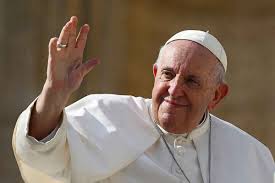
Pope Francis, who humbly preferred to be called "Father" over "Your Holiness," chose simplicity not just in attire but in spirit and actions.
His white cassock wasn’t just a statement of faith—it was an emblem of humility that resonated far beyond the Vatican.
From his upbringing in the barrios of Buenos Aires to his tenure in the marble corridors of the Vatican, Jorge Mario Bergoglio never lost his genuine touch with people on the margins.
As the first pope from the Global South and the first Jesuit and non-European leader of the Catholic Church in centuries, Francis brought a shift in tone and priorities, steering the Church toward openness, conversation, and a sense of shared humanity.
His papacy, which began in 2013, arrived at a moment when the Church was struggling with scandal and trust issues.
Francis quickly became a figure in whom many saw hope. He made it clear that power should serve, not rule—a value he modeled by consistently lifting the needs of the marginalized, whether through washing the feet of migrants or speaking to the suffering of refugees and the poor.
Social justice was not just rhetoric for him; it was his blueprint for leadership.
Francis’ connection to the Middle East and the Arab world was profound. He forged new paths in interfaith dialogue, embraced peace-building, and never hesitated to address human rights.
In 2019, he broke centuries of precedent by visiting the Arabian Gulf, including the United Arab Emirates, where he signed a pact with Sheikh Ahmed El-Tayeb of Al-Azhar.
This was no empty gesture—through the "Document on Human Fraternity," he called for unity against extremism and for enduring partnerships that transcend religious lines.
In Iraq, his visit to Grand Ayatollah Ali Sistani in 2021 was a landmark for Christian-Muslim relations. Each journey underscored his belief in dialogue, dignity, and coexistence, values that the Arab world deeply respected.
His audience with leaders from Bahrain, the UAE, and the Muslim World League demonstrated his commitment to building bridges, and he often gave voice to those caught in the conflict, as he did in his final days by advocating for a ceasefire in Gaza and humanitarian relief for Palestinians.
Pope Francis' courage sometimes placed him at odds with powerful interests. He labeled the 2024 Israeli campaign in Gaza as “immoral” and “disproportionate,” an act that generated diplomatic ripples yet underscored his unwavering advocacy for peace.
He consistently called for negotiations, compassion, and a two-state solution, clarifying that dialogue must outlast division.
Leaders and ordinary people across the Arab world have expressed deep sorrow at his passing.
From Palestinian theologians to Lebanese analysts, the consensus is clear—Francis was not only a religious leader but a genuine friend to the region.
His open rejection of elitism and his enduring support for Lebanon’s pluralism, for example after the Beirut port explosion, reflected a leadership rooted in real empathy.
He was admired for his ability to speak uncomfortable truths and comfort those suffering, whether Christian or Muslim.
Gestures like washing the feet of Muslim migrants or correcting misconceptions about the language of Jesus revealed a pope who paid attention to the details that matter to believers of any faith.
Following his death, Arab and Muslim leaders—including the presidents of Egypt, the UAE, Lebanon, Turkey, and Jordan—joined religious organizations in commending Francis as a champion of coexistence, justice, and humanity.
Statements called him a beacon of compassion and a builder of bridges, emphasizing the depth of his relationships in the region and globally.
What endures after Francis' passing is a legacy marked by courage, humility, and the belief that the most powerful force in the world lies in serving others—not in seeking status or limelight.
His memory isn’t confined to Vatican tradition but lives on in the hope he brought to those on the margins, especially in the Arab world, and the standard he set for interfaith respect and dialogue.
No comments yet.