
People Over Politics: Bilawal Bhutto's Water Rights Battle Echoes PPP's Historical Stance
Bilawal Bhutto Zardari's message was unequivocal: abandon this project immediately, or the PPP will withdraw its crucial support from Prime Minister Shehbaz Sharif's government.
By Junaid Qaiser
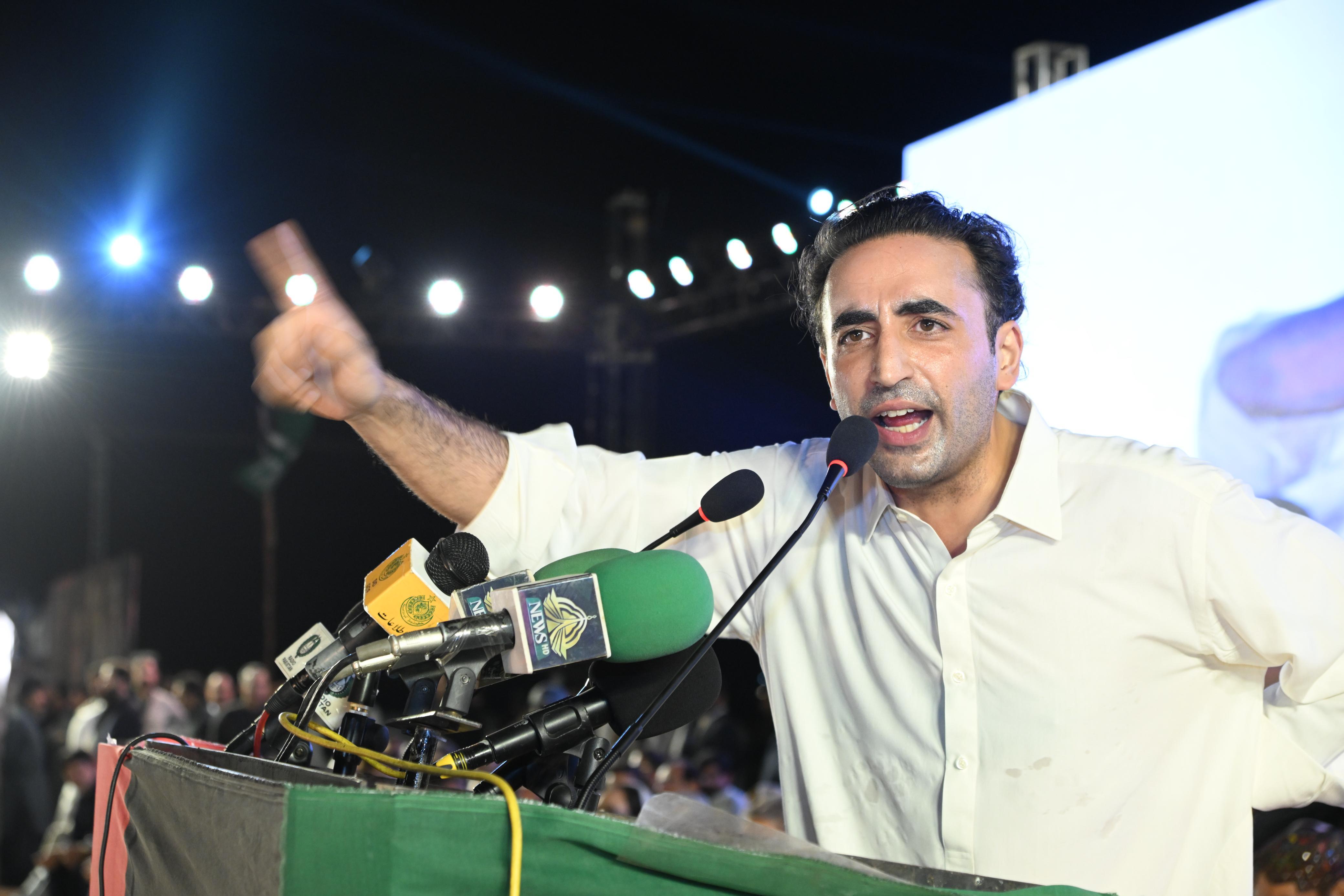
In a powerful demonstration of political resolve, Pakistan Peoples Party (PPP) Chairman Bilawal Bhutto Zardari has issued a clear ultimatum to the federal government regarding its controversial plan to construct six new canals on the Indus River. Speaking at a substantial public gathering in Hyderabad on April 18, Bilawal Bhutto Zardari's message was unequivocal: abandon this project immediately, or the PPP will withdraw its crucial support from Prime Minister Shehbaz Sharif's government.
This stance represents more than just political maneuvering—it reflects a deeply rooted commitment to protecting water rights that has defined the PPP's leadership across generations. "If I am ever forced to choose between the government and the people, I will stand with the people—every single time," declared Bhutto Zardari, emphasizing that his party's priorities lie with the citizens rather than political alliances.
The historical context of this struggle adds significant weight to the chairman's position. He explicitly connected his current fight to the legacy of his mother, Shaheed Mohtarma Benazir Bhutto, who waged similar battles for water rights decades earlier. During her time in opposition, despite having won elections, she mobilized PPP workers across Pakistan—from Hyderabad to Lahore, Multan, Khyber Pakhtunkhwa, and Quetta—to protest against controversial water projects. Through persistent demonstrations, they successfully pressured the government of that era to abandon its plans.
Bhutto Zardari was careful to frame his opposition not as mere political obstruction but as a defense of national unity. He expressed profound concern about the timing of this controversial project, noting that it comes during a period when terrorist organizations are actively conducting attacks in Balochistan and Khyber Pakhtunkhwa. "They have stirred a matter that risks turning brother against brother, endangering the federation, and above all, threatens our people with death by thirst," he warned, underscoring the potentially devastating consequences of proceeding with the canals.
The PPP chairman also highlighted his party's historical commitment to agricultural development and farmer welfare. He recalled how Quaid-e-Awam Shaheed Zulfikar Ali Bhutto had granted land ownership to landless peasants, how Benazir Bhutto consistently advocated for farmers during difficult times, and how President Asif Ali Zardari's policies had once brought agricultural prosperity to Pakistan, enabling wheat exports. This agricultural legacy stands in stark contrast to what he characterized as the anti-farmer and anti-agriculture policies of the current Pakistan Muslim League (N) government.
The practical implications of these policies, according to Bhutto Zardari, are dire. He criticized the federal government for prohibiting provinces from purchasing wheat from farmers and providing subsidies, while simultaneously imposing heavy taxation on the agricultural sector. "Under these conditions, where will the farmers of Sindh and Punjab go?" he asked, highlighting the immediate economic threat to agricultural communities.
The PPP's opposition to canal projects has been consistent across political divides. Bhutto Zardari reminded his audience that when former Prime Minister Imran Khan had approved the construction of two canals, the PPP had similarly opposed that decision and ultimately helped bring about a vote of no confidence against his government. This consistency demonstrates that the party's position transcends partisan politics and is rooted in principles regarding water distribution and federalism.
To demonstrate the seriousness of their opposition, the PPP has already passed a resolution against the canal project in the Sindh Assembly and raised objections in the National Assembly. President Asif Ali Zardari has likewise rejected the project during his address to the joint session of Parliament. The PPP's next step, as announced by the chairman, will be a protest rally in Sukkur on April 25, for which he appealed for widespread public participation.
Water equity, Bilawal reminded listeners, is a heritage. Under Bhutto family leadership, landless peasants became landowners, farmers were empowered, and Pakistan grew into a net wheat exporter. He contrasted that vision with today’s federal policies, which bar provinces from buying wheat, deny subsidies, and burden agriculture with punitive taxes. At a time when terrorism ravages Balochistan and Khyber Pakhtunkhwa, and inflation crushes ordinary families, diverting the Indus into new canals risks pitting brother against brother—and condemning our children to thirst.
Yet Bilawal did not merely criticize; he offered hope. He pledged that, if the canal plan is halted, the PPP will present a fifty‑year roadmap for agricultural development—one that balances progress in Tharparkar, Cholistan, and beyond, without sacrificing the Indus. His call to joint action—“development in all four provinces, reduced inflation, jobs for our youth, and a decisive defeat for the terrorists”—echoed the inclusive agenda that has long defined his party.
Importantly, Bilawal made clear that this struggle transcends ministerial portfolios or political maneuvering. The PPP’s principles demand that water—and by extension, life—be safeguarded above partisan gain. Passed resolutions in both the Sindh Assembly and the National Assembly, as well as President Asif Ali Zardari’s own rejection of the scheme in a joint parliamentary address, attest to the party’s unified front.
As this controversy unfolds, it has implications not only for water distribution and agriculture but also for the stability of Pakistan's governing coalition and, potentially, for the federation itself. The PPP chairman's firm stance reflects his understanding that water is not merely a resource but a lifeline, particularly in regions already facing scarcity. His appeal to halt the canal project and instead develop a comprehensive 50-year agricultural development plan suggests an alternative path forward that could address the needs of all provinces without compromising the water security of any.
The PPP's electoral strength was recently reaffirmed in the NA-213 by-election in Umerkot, where their candidate secured a decisive victory against a coalition of 17 parties, including both the PML-N and PTI. For Bhutto Zardari, this result confirms the enduring bond between the PPP leadership and the people, a relationship that spans generations and provides the party with both moral authority and political leverage in this confrontation with the federal government.
Finally, Bilawal announced a protest rally in Sukkur on April 25, inviting citizens to join the fight to save the Indus and, with it, the federation. His message is simple yet profound: when governments stray from serving the people, it is the people—armed with conviction and unity—who must prevail.
In this critical moment, Bilawal Bhutto Zardari has reaffirmed the PPP’s legacy of principled resistance and constructive policy-making. By placing the people’s needs and Pakistan’s ecological and agricultural future at the forefront, he has issued a clarion call to safeguard our nation’s lifeblood—and, in doing so, preserve the very foundations of our democracy.

No comments yet.