
The Intellectual Legacy of Taj Haider: A Critical Juncture for Pakistani Politics
“A party that stops dreaming becomes a machine. And machines don’t inspire revolutions.” Whether the PPP heeds this warning may determine its relevance in Pakistan’s unfolding democratic saga.
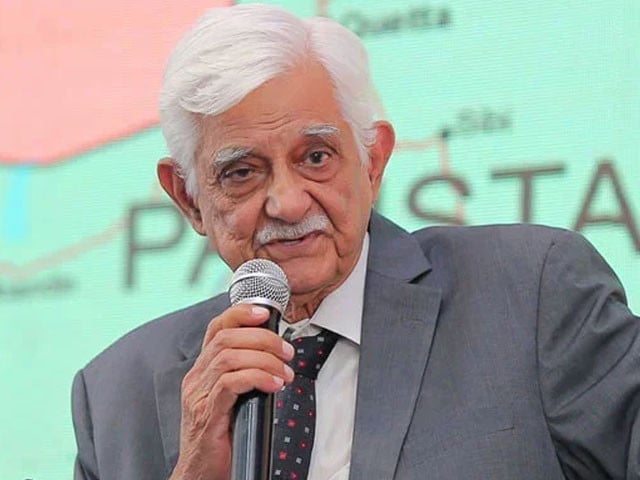
By Junaid Qaiser
In a profound moment of loss for Pakistan's political and intellectual landscape, the death of Taj Haider represents far more than the passing of a single individual. His departure creates a void that resonates deeply within the Pakistan Peoples Party (PPP) and throughout democratic circles across the nation, where thoughtful discourse and progressive ideals are cherished. His wife's announcement of his death triggered an outpouring of grief from across Pakistan's political landscape, reflecting the respect he commanded not only within his party but throughout the nation's democratic circles.
Taj Haider was far more than a political figure. As General Secretary of the PPP from 2023 until his death, he represented one of the last connections to the party's intellectual foundations. His service included multiple terms as a Senator representing the PPP from Sindh during 2012-2018 and again from 2021 until his passing. During these years, he chaired the Senate's Standing Committee on Rules of Procedure and Privileges, demonstrating his profound understanding of parliamentary processes.
Beyond politics, Haider established himself as a respected playwright, highlighting the multidimensional nature of his contributions to Pakistani society. President Asif Ali Zardari and PPP Chairman Bilawal Bhutto-Zardari were among the first to express their profound sorrow at his death. Bilawal notably described Haider as a "symbol of awareness and wisdom in Pakistani politics," acknowledging his expansive influence across political, social, and literary domains.
Haider's relationship with the PPP stretched back to its inception in 1967, making him one of its original architects. His unwavering support for Zulfikar Ali Bhutto's left-leaning ideology reflected the central role that intellectuals played in establishing the party's philosophical foundation. This foundational period demonstrates how the PPP was originally conceived not merely as a political vehicle but as an intellectual movement with transformative aspirations for Pakistani society.
The Pakistan Peoples Party's establishment was fundamentally an intellectual enterprise. Founded on November 30, 1967, in Lahore by Zulfikar Ali Bhutto, the party emerged from gatherings of 67 prominent thinkers at Dr. Mubashir Hassan's residence. Their collective vision aimed to create an "egalitarian democracy" implementing "progressive ideas" to achieve economic and social justice in Pakistan.
This intellectual foundation was strengthened by the involvement of luminaries like Faiz Ahmed Faiz, who served as Bhutto's cultural advisor. Along with figures like Hanif Ramey, Taj Haider himself, and Bashir Riaz, these thinkers developed the progressive philosophy that defined the PPP's early years and articulated its vision for Pakistan's future.
The tradition of intellectual engagement continued under Benazir Bhutto's leadership. As a self-identified liberal and secularist, she maintained the party's connection to Pakistan's thinking class and recognized the value of informed discourse in navigating Pakistan's complex political terrain.
However, following her assassination, this vital connection between politics and intellectual thought began to weaken significantly. Political analysts suggest that the PPP's declining influence in Punjab—once a stronghold—stems largely from this disconnection from intellectuals, journalists, and cultural figures who could effectively communicate the party's progressive ideology. The strategy of relying predominantly on "electables"—politicians with guaranteed vote banks but often lacking ideological commitment—has proven insufficient for sustaining the party's broader appeal.
For the PPP to reclaim its former significance and relevance, it must rebuild relationships with contemporary thinkers capable of developing narratives that resonate with today's challenges. The party requires visionaries who can translate its founding principles into frameworks addressing current social, economic, and political realities.
Intellectuals serve multiple crucial functions for political movements: they shape public opinion, provide historical perspective to inform decision-making, and help integrate citizens around shared values and goals. Their critical thinking skills are essential for analyzing complex information, exposing falsehoods, and holding power accountable—all vital for maintaining public trust.
Haider's passing represents both a profound loss and a potential turning point, highlighting the critical need for political movements to nurture intellectual foundations alongside electoral strategies. As Pakistan's democratic landscape continues to evolve, the enduring lesson of figures like Taj Haider remains clear: sustainable political movements require not just electoral machinery but the oxygen of ideas.
In an era characterized by rapid change and complex challenges, engaging intellectuals who can articulate modern narratives is essential for political parties to remain relevant and connect with younger generations. The vibrant political movement that the PPP once represented was characterized by the continuous generation of new ideas and innovative solutions to societal problems—a process in which intellectuals like Taj Haider played a central role.
Haider himself seemed to anticipate this challenge. In what would become his final interview, he observed with remarkable clarity: "A party that stops dreaming becomes a machine. And machines don't inspire revolutions." This insight captures the essential dilemma facing the PPP today, particularly in Punjab—can it reclaim its role as a vehicle for transformative ideas, or will it continue to function primarily as an electoral apparatus?
For the PPP to navigate Pakistan's complex and evolving democratic landscape effectively, it must deliberately reconnect with intellectual communities capable of developing narratives that resonate with contemporary realities. The historical evidence suggests that the party's periods of greatest influence coincided with its strongest intellectual foundations.
Since Pakistan bids farewell to one of its most thoughtful political voices, Haider's passing offers both a moment of reflection and a potential turning point. The question now facing the PPP is whether it will heed the implicit warning in Haider's final public words—that without the oxygen of ideas and the capacity to inspire, even the most established political institutions risk becoming irrelevant to the dreams and aspirations of those they seek to represent.
As Pakistan mourns the loss of this distinguished political figure, his legacy serves as a reminder of the indispensable value of intellectual engagement in political life and the ongoing need to bridge the gap between ideas and action.
No comments yet.