
Rising Above Politics: Bilawal Bhutto Zardari's Courageous Path to National Consensus
The path of reconciliation is never easy, but it is necessary. And in Bilawal's emerging leadership, there is genuine hope that Pakistan can transcend its political divisions and confront its challenges with unity, purpose, and shared resolve.
By Junaid Qaiser
Pakistan finds itself at a precarious juncture, grappling with a resurgent wave of terrorism amidst a landscape marked by deep political fissures. The recent hijacking of the Jaffar Express in Balochistan and the absence of key political players from crucial national security meetings serve as stark reminders of the challenges facing the nation. In this environment of heightened tension and division, the offer by Pakistan Peoples Party (PPP) Chairman Bilawal Bhutto Zardari to initiate a dialogue with Imran Khan's Pakistan Tehreek-e-Insaf (PTI) to forge a consensus against terrorism stands out as a significant and commendable step towards national unity. This initiative not only reflects a pragmatic approach to tackling a grave national threat but also underscores the enduring commitment of the PPP to reconciliatory politics, a philosophy deeply embedded in the legacy of Shaheed Benazir Bhutto.
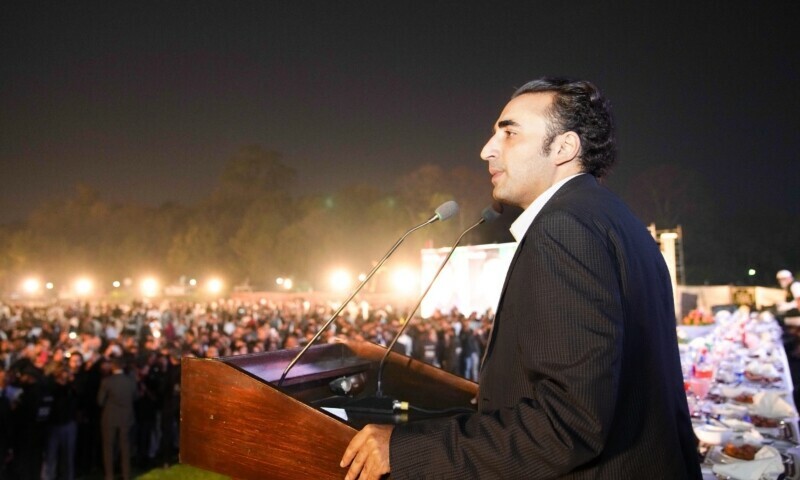
The current political moment demands more than rhetoric; it requires genuine commitment to national interests. Bilawal Bhutto Zardari has stepped forward with a remarkable proposal that embodies the essence of his mother's political vision – the philosophy of reconciliation. By urging Prime Minister Shehbaz Sharif to reconvene the Parliamentary Committee on National Security and explicitly calling for the inclusion of all political stakeholders, he has shown a maturity that rises above traditional political squabbles.
His statement that "we must unite to fight terrorists" is not merely a platitude but a profound call to action. In a political environment often characterized by fragmentation, Bilawar's approach represents a nuanced understanding that national security cannot be a partisan issue. By seeking dialogue with the opposition, including Imran Khan's PTI, he demonstrates a willingness to put national interests ahead of political point-scoring.
The PPP Chairman has also offered his party's unique position as a potential "bridge" between the government and the opposition to facilitate dialogue and cooperation. This willingness to act as a facilitator highlights a pragmatic understanding of the current political dynamics and a proactive approach towards fostering the necessary collaboration to address national security challenges effectively.
The government's receptiveness to Bilawal's initiative, as articulated by Adviser Rana Sanaullah, is a promising sign. The acknowledgment that Bilawal's potential dialogue with PTI could be beneficial for the government itself indicates a growing recognition of the need for collaborative governance.
This approach is particularly significant given the complex security challenges Pakistan currently faces. The recent rise in terrorist activities, symbolized by incidents like the Jaffar Express hijacking, demands a unified national response. Bilawal understands that effective counterterrorism strategies cannot be developed in political silos but require a comprehensive, inclusive approach.
Bilawal Bhutto Zardari's initiative is not an isolated event but rather a continuation of the Pakistan Peoples Party's long-standing commitment to political reconciliation. Following the tragic assassination of Shaheed Benazir Bhutto, the PPP consciously chose to continue her policy of reconciliation with all political players . This commitment was further exemplified by President Asif Ali Zardari, who, in the aftermath of Benazir's martyrdom, emphasized the politics of reconciliation and power-sharing amongst major political stakeholders. A significant instance of this reconciliatory approach was the Charter of Democracy (COD), a collaborative effort between the PPP and the Pakistan Muslim League-Nawaz (PML-N) aimed at strengthening democratic institutions in the country. These historical examples demonstrate a consistent pattern within the PPP of prioritizing dialogue and consensus-building as essential tools for achieving political stability and tackling the nation's pressing issues.
The philosophical underpinning of this approach can be traced back to Sheheed Benazir Bhutto's own vision, articulated in her book "Reconciliation: Islam, Democracy, and the West". In her work, she explored the critical need to bridge divides, advocating for tolerance, justice, and the inherent compatibility of Islam and democracy. Her philosophy extended beyond mere political alliances, encompassing a broader vision of societal harmony and mutual understanding. This resonates strongly with Bilawal Bhutto Zardari's current call for national unity against the threat of terrorism, suggesting a continuity of thought and approach within the PPP leadership.
The federal government's response to Bilawal Bhutto Zardari's offer has been notably positive. Adviser to Prime Minister Rana Sanaullah stated unequivocally that the government has "no objections" to Bilawal engaging in dialogue with the PTI. He further clarified that if the PPP chairman succeeds in securing the PTI's commitment to participate in talks, the government would readily reconvene the Parliamentary Committee on National Security meeting. This acceptance indicates a recognition within the ruling coalition of the pressing need for broader consensus on national security issues and a willingness to collaborate with Bilawal Bhutto Zardari's initiative. Rana Sanaullah even acknowledged that the success of such talks would ultimately be a "success for the government itself," highlighting a pragmatic understanding of the collective benefit of a unified approach.
However, the government's willingness to reconvene the PCNS is contingent upon the PTI's assurance of participation. This conditionality places the onus on the PTI to respond positively, underscoring the crucial role of reciprocal engagement in any meaningful consensus-building process. Alongside the acceptance of Bilawal's offer, reports have also emerged of the PML-N demanding a share in power in Sindh from the PPP. This detail reveals the intricate political dynamics at play within the ruling coalition, highlighting that even amidst calls for national unity, underlying political negotiations and considerations persist.
What makes Bilawal's stance remarkable is its departure from the typically adversarial nature of Pakistani politics. By emphasizing that political stakeholders must prioritize the country and nation over personal interests, he is proposing a revolutionary model of political engagement – one built on dialogue, mutual respect, and shared national objectives.
His efforts echo the transformative legacy of Benazir Bhutto, who consistently advocated for democratic dialogue and national unity. In many ways, Bilawal is not just a political heir but a genuine inheritor of a progressive political vision that sees beyond immediate partisan gains.
The urgency for national unity is underscored by the alarming rise in terrorist attacks across Pakistan. The country has regrettably become the second-most terrorism-affected nation globally, experiencing a dramatic 45 percent increase in terrorism-related fatalities in a recent year. The number of terrorist attacks has more than doubled, exceeding 1,000 incidents for the first time. This surge is linked to the influence of the Afghan Taliban and the intensified operations of groups like the Tehreek-e-Taliban Pakistan (TTP), which remains the deadliest group, responsible for a significant majority of terrorism-related deaths. Khyber Pakhtunkhwa and Balochistan provinces have been particularly affected, bearing the brunt of this escalating violence.
| Year | Number of Terrorism-Related Fatalities | Percentage Increase in Fatalities (Year-on-Year) | Number of Terrorist Attacks | Key Contributing Terrorist Groups | Most Affected Provinces |
|---|---|---|---|---|---|
| 2023 | 748 | - | 517 | TTP, Balochistan Liberation Army, ISIS | Khyber Pakhtunkhwa, Balochistan |
| 2024 | 1,081 | 45% | 1,099 | TTP | Khyber Pakhtunkhwa, Balochistan |
Note: Data compiled from: Global Terrorism Index 2025: Pakistan becomes world's second-most terrorism affected country Country
Reports on Terrorism 2023: Pakistan
In the face of these sobering statistics and the multifaceted negative consequences of terrorism, Bilawal Bhutto Zardari's initiative offers a crucial glimmer of hope. His attempt to rise above partisan interests and invite all political forces to the table is indeed commendable . It serves as a timely reminder that consensus, though increasingly difficult to achieve, remains essential if the state is to effectively marshal its resources against the persistent threat of terrorism. This initiative aligns with the PPP's historical dedication to reconciliation and Benazir Bhutto's enduring vision of a united and tolerant Pakistan. Ultimately, the success of this dialogue holds the potential to pave the way for a more effective, cohesive, and unified national strategy to combat terrorism and safeguard the future of Pakistan.
In a political landscape often criticized for its fragmentation, Bilawal Bhutto Zardari represents a promising alternative. His commitment to consensus-building, his willingness to engage with political opponents, and his focus on national interests offer a glimpse of a more collaborative and constructive political future for Pakistan.
The path of reconciliation is never easy, but it is necessary. And in Bilawal's emerging leadership, there is genuine hope that Pakistan can transcend its political divisions and confront its challenges with unity, purpose, and shared resolve.
No comments yet.