Bilawal Bhutto Zardari Engages U.S. Experts in High-Level Discussions
Bilawal Bhutto Zardari’s Diplomatic Engagements in Washington Deemed a Success
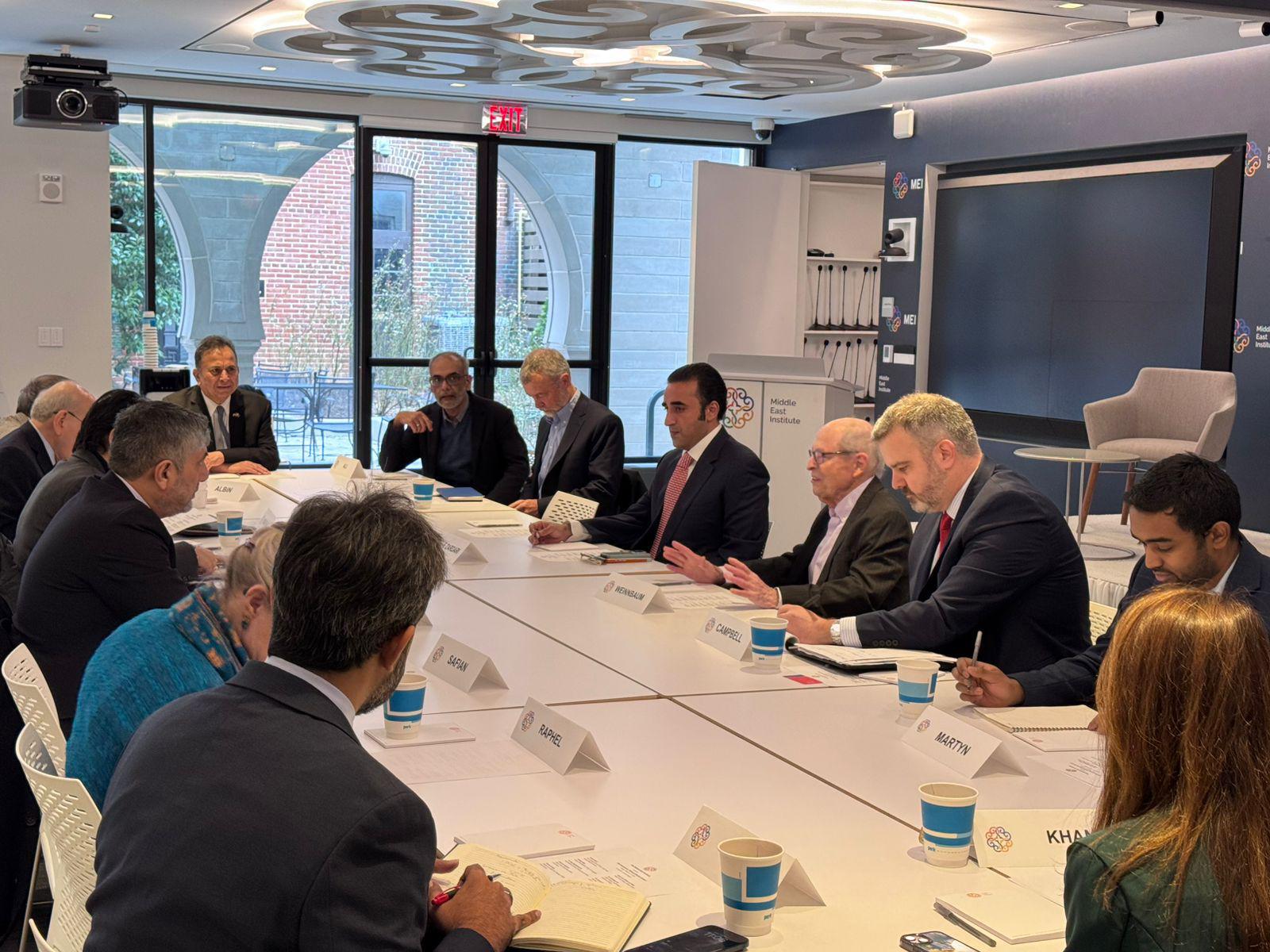
Washington: Pakistan Peoples Party (PPP) Chairman Bilawal Bhutto Zardari’s visit to the United States has been termed a success following a series of high-profile meetings at the Middle East Institute in Washington, where he engaged with scholars, policymakers, and experts on key global issues.
During his visit, Bilawal met with prominent figures, including Michael Albin, former field director of the Library of Congress; Jason H. Campbell, senior policy researcher at the RAND Corporation; Javed Ahmed, non-resident senior fellow at the Atlantic Council’s South Asia Center; and Dr. Syed Muhammad Ali, non-resident scholar at the Middle East Institute. Discussions covered pressing geopolitical challenges and opportunities for strengthening ties between Pakistan and the United States.
He also held meetings with Eamon Hartis, manager of systems and operations at the Middle East Institute; Sahar Khan, deputy director of the Stimson Center for South Asia; Dr. Alan Kronstadt, specialist for South Asian affairs at the Congressional Research Service; and Dina Marshall, president of the Transnational Strategy Group.
Further interactions included Kirthi Martin from the Center for a New American Security, Ambassador (Retd.) William B. Mellum from the Wilson Center, and experts such as Dr. Asfandyar Mir from the United States Institute of Peace and Dr. Aparna Pande from the Hudson Institute. Bilawal also met with Ruben L. Reiffel from the Center for Strategic and International Studies, Maheen Sufyan from the Middle East Institute, and Omar Samad from the Atlantic Council’s South Asia Center.
His discussions extended to Dr. Susan E. Saxton, COO of the Middle East Institute, V. Marvin Weinbaum, senior fellow for Afghanistan and Pakistan studies, and Andrew Wilder, vice president of the Asia Center, further solidifying academic and diplomatic engagements.
Emphasis on Faith and Unity
Addressing the closing ceremony of his visit, Bilawal underscored the role of faith in uniting people rather than dividing them. "One thing I want to say to you here today as a man of faith, as a politician, is that religion is often used to divide us. But the great thing about faith, about God, about the Almighty, about religion, is that it’s not a force that divides us—it is a force that unites us, and never let anyone tell you otherwise," he said.
Reflecting on his personal faith journey, Bilawal spoke about the tragedies his family endured, including the assassination of his grandfather, former Prime Minister Zulfiqar Ali Bhutto, and the deaths of his uncles, Shahnawaz and Mir Murtaza Bhutto. He also recalled the tragic assassination of his mother, former Prime Minister Shaheed Benazir Bhutto, just weeks before she was scheduled to address the National Prayer Breakfast in 2008.
He emphasized the universality of religious teachings, saying, "Jesus doesn’t just belong to the Christians. I learned about Jesus from my mother, who taught me about Jesus as he is in the Holy Quran and in Muslim teachings. Every single Muslim, no matter what you’re told, believes in Jesus."
Participation in the National Prayer Breakfast
Bilawal’s U.S. visit also included attending the prestigious National Prayer Breakfast, which featured high-ranking personalities from around the world, including U.S. President Donald Trump and Vice President JD Vance. The event, which lasted for nearly seven hours, provided an opportunity for interfaith dialogue and global networking.
Speaking to the media after the event, Bilawal described it as an excellent platform for fostering interfaith harmony and strengthening global relationships. He expressed his gratitude for the opportunity, stating, "I’m grateful to the National Prayer Breakfast, or rather, the International Prayer Breakfast, for providing us the chance to unite around our shared belief in Jesus."
Bilawal arrived in the U.S. on Monday for this visit, engaging in a series of diplomatic and policy-driven meetings. While no longer serving as Pakistan’s foreign minister, he clarified that his engagements were conducted in a personal capacity.
His visit is being viewed as a step forward in enhancing Pakistan-U.S. public diplomacy, with analysts highlighting his efforts in bridging divides through dialogue and faith-based discussions.