
Budget 2025–26: Promises Broken, Priorities Skewed
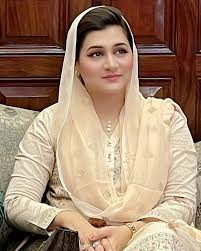
By Sania Kamran, Former MPA & Leader, Pakistan Peoples Party
The unveiling of the Rs. 17,573 billion federal budget for 2025–26 offers little more than a mathematical ritual—figures announced, deficits declared, and dreams deferred. What should have been a people-centric budget has instead become an exercise in financial formalism, disconnected from ground realities. A deficit of Rs. 6,501 billion and a staggering Rs. 8,207 billion allocated for interest payments alone raises the pivotal question: who, truly, is this budget designed to serve?
The government's own economic survey is a damning self-indictment. Major crops—wheat, rice, sugarcane, cotton, maize—have all shown declining productivity, yet there is no meaningful relief or incentive for the farmer. Agriculture forms the backbone of our economy, but this budget treats the sector as a footnote. When nations around the world invest in and subsidize their farmers, how can an agrarian country like Pakistan justify such neglect?
The salaried class—the very people who keep the economic engine running—have once again been made scapegoats. Instead of broadening the tax net or targeting wealth and capital, the government has increased the burden on everyday citizens through hikes in petrol, electricity, gas, and toll taxes. The elite remain shielded while the working class is squeezed dry. The 10% salary increase announced for government employees, against a backdrop of double-digit inflation, borders on the farcical. It is not a raise—it is a mockery of the people’s struggle.
Worse still, essential projects in smaller provinces have been sidelined. The allocation of a mere Rs. 15 billion for the Hyderabad–Sukkur Motorway—a lifeline for Sindh—is a glaring act of imbalance. Sindh is home to Karachi Port, the gateway of Pakistan’s exports and imports, and yet receives crumbs in comparison to national allocations elsewhere. As my colleague Sharjeel Inam Memon rightly pointed out, this isn’t just neglect; it’s economic injustice that hurts the federation itself.
In contrast to Punjab’s disproportionate share, Sindh’s vital infrastructure and development needs are continuously ignored. Promises made to PPP during budget consultations—including those by the Prime Minister himself to Chairman Bilawal Bhutto Zardari—were discarded as soon as the cameras turned off. That betrayal reflects the growing trust deficit between the center and its coalition partners.
Chaudhry Manzoor Ahmed’s statement labeling this budget as "anti-people and anti-worker" is not hyperbole—it is a sober reading of the facts. The decision to end pensions after ten years, the failure to raise the EOBI pension, and the neglect of minimum wage adjustments in line with actual living costs, all point toward a budget tailored for elites and institutions, not for citizens.
Adding insult to injury is the audacity of some ministers calling marginal raises for lawmakers “financial obscenity,” without acknowledging the obscene privilege already embedded within the system for the elite class—cabinet members, parliamentarians, and judges included.
This budget is silent on poverty, even though over 100 million Pakistanis live below the poverty line, according to the 2018 census. The World Bank has raised alarm bells over increasing inequality, but the government seems content to continue policies that deepen the crisis. Five major crops in decline, small businesses crumbling, and inflation raging—yet no structural reforms.
The Pakistan Peoples Party demanded a 50% salary increase, a meaningful package for farmers, and targeted relief on electricity bills. We demanded a fair representation for Sindh and other smaller provinces in national development projects. We demanded a voice, not just votes. But our demands were dismissed, and the principles of federalism ignored.
This is not just a missed opportunity—it is a dangerous miscalculation.
If the government wants to avert unrest and political instability, it must reconsider its budgetary choices. Reforms are not a favor to the opposition—they are a necessity for the country’s survival. Ignoring coalition partners, suffocating provinces like Sindh, and crushing the working class under the weight of elite privilege is not governance—it’s a slow march toward national disintegration.
Let this be a warning: the PPP will not remain silent spectators. As Chaudhry Manzoor has announced, the party will take to the streets to oppose this budget. The responsibility for any resulting instability lies squarely with those who drafted this document of disappointment.
A people’s budget must prioritize people. Until then, this remains not a roadmap for development, but a ledger of broken promises and skewed priorities.
No comments yet.