
Benazir Bhutto Shaheed: The Political Philosophy and Legacy,
By Dr.Nasir Hussain Bukhari
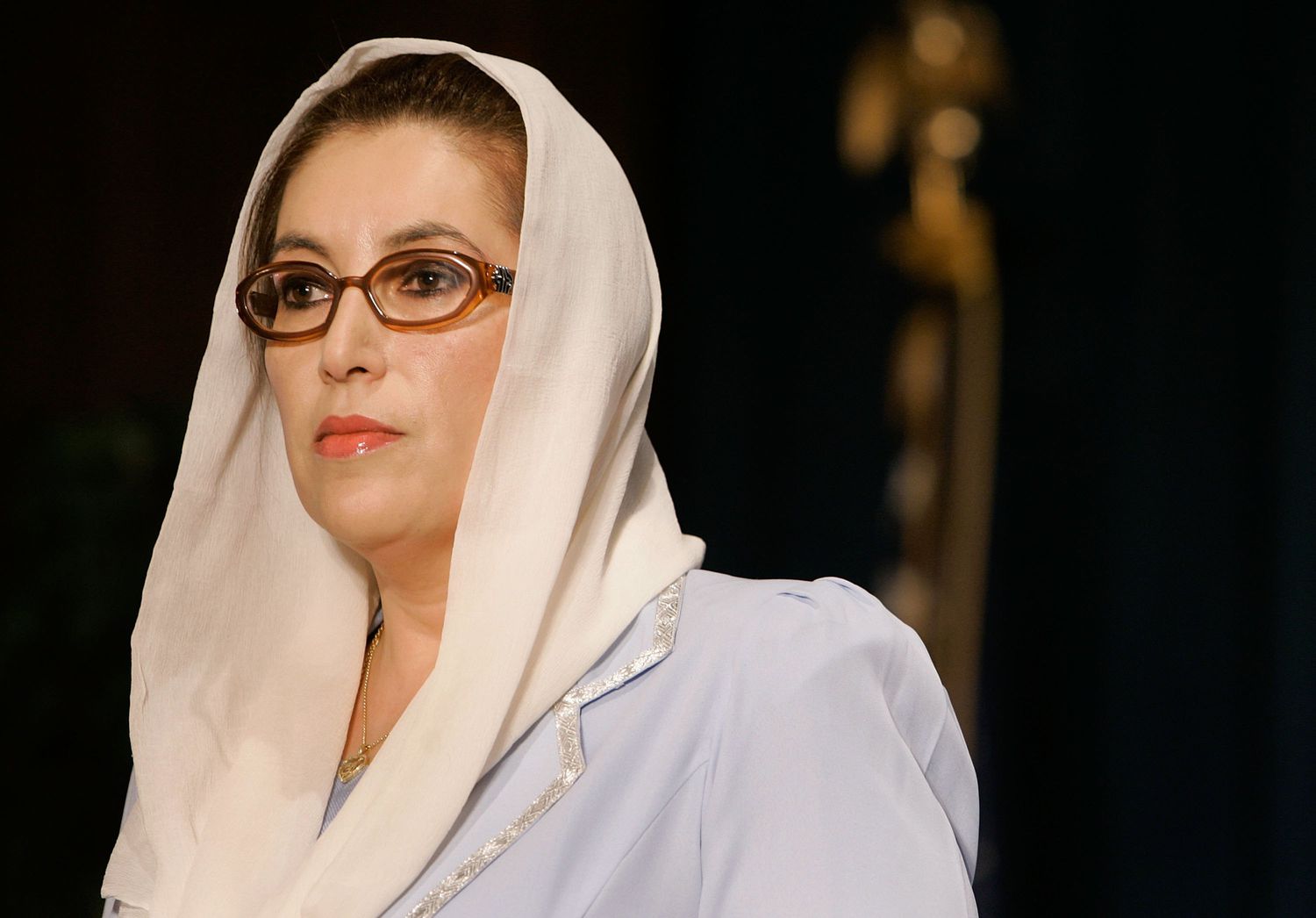
Shaheed Benazir Bhutto,the first female prime minister of Pakistan, was a prominent figure in the country's political landscape. She was born on June 21, 1953, into a prominent political family in Karachi, Pakistan. Her father, Zulfikar Ali Bhutto, was a former prime minister of Pakistan, and her mother, Nusrat Bhutto, was a well-known political figure as well. Benazir inherited their legacy of commitment to democracy and public service.
Benazir Bhutto embarked on her political journey at a young age, witnessing the tumultuous political environment in Pakistan. She received her early education at Harvard University and later studied at Oxford University, where she developed a keen interest in politics and international affairs. Benazir returned to Pakistan in 1977, eager to make a difference in her country's political landscape.
Her political career began in 1977 when her father, Zulfikar Ali Bhutto, was ousted from power in a military coup led by General Zia-ul-Haq. Benazir and her family faced immense hardships during Zia's martial law regime, with her father being imprisoned and ultimately executed in 1979. Despite the challenges, Benazir remained undeterred and committed to carrying forward her father's legacy of promoting democracy and social justice in Pakistan.
Benazir Bhutto founded the Pakistan People's Party (PPP) in 1986, with a mission to restore democracy and fight for the rights of the people. She quickly gained a following among the masses, who were inspired by her courage and determination in the face of adversity. In 1988, Benazir made history by becoming the first female prime minister of Pakistan, a significant achievement in a male-dominated society.
During her tenure as prime minister, Benazir Bhutto implemented a range of progressive policies aimed at improving the lives of ordinary Pakistanis. She focused on social welfare programs, education reform, and women's empowerment initiatives. Benazir believed in a democratic system that respected human rights, promoted equality, and provided opportunities for all citizens to prosper.
One of Benazir Bhutto's key accomplishments was her role in creating the Charter of Democracy in 2006. This historic document was a landmark achievement in Pakistan's political history, as it laid out a framework for cooperation between different political parties to strengthen democratic institutions and uphold the rule of law. The Charter of Democracy was signed by Benazir Bhutto and Nawaz Sharif, another prominent political leader, in a show of unity and commitment to democratic values.
Benazir Bhutto's political philosophy was rooted in the principles of democracy, social justice, and egalitarianism. She believed in the power of the people to bring about positive change through their collective action and activism. Benazir was a vocal advocate for women's rights and gender equality, often speaking out against gender discrimination and violence against women.
Despite facing numerous challenges and threats to her life, Benazir Bhutto remained resolute in her commitment to democracy and public service. She continued to be a beacon of hope for the people of Pakistan, inspiring a new generation of leaders to follow in her footsteps. Tragically, Benazir Bhutto was assassinated in 2007, while campaigning for the general elections. Her untimely death shook the nation and led to an outpouring of grief and anger from her supporters.
Benazir Bhutto's legacy as a champion of democracy and social justice in Pakistan continues to inspire millions of people around the world. Her courage, determination, and unwavering commitment to her principles have made her a symbol of hope and progress in a country plagued by political turmoil and instability. Benazir Bhutto's struggle for democracy and her contributions to Pakistan's political landscape will always be remembered as a testament to the power of leadership and perseverance in the face of adversity.
Benazir Bhutto, the first female Prime Minister of Pakistan, played a pivotal role as the leader of the opposition during the Zia regime in the 1980s. This was a challenging time for Pakistan, as General Zia-ul-Haq had established martial law and imposed strict authoritarian rule in the country. Benazir Bhutto emerged as a strong and fearless voice against the oppressive regime, advocating for democracy and human rights
When General Zia-ul-Haq staged a military coup in 1977 and overthrew the democratically elected government of Prime Minister Zulfikar Ali Bhutto, Benazir Bhutto was thrown into the political turmoil. Her father was arrested, tried in a controversial trial, and eventually executed in 1979. Benazir Bhutto was also arrested and detained several times by the Zia regime, but her resolve and determination only grew stronger.
As the leader of the opposition during the Zia regime, Benazir Bhutto faced numerous challenges and obstacles. The military dictatorship was ruthless in its crackdown on dissent, and the media was heavily censored. However, Benazir Bhutto fearlessly spoke out against the oppressive regime, demanding the restoration of democracy and the rule of law.
One of the main issues that Benazir Bhutto championed as the leader of the opposition was the restoration of civil liberties and human rights. She condemned the widespread human rights abuses committed by the Zia regime, including the suppression of political dissent, arbitrary arrests, torture, and censorship. Benazir Bhutto spoke out against the draconian laws imposed by General Zia, such as the Hudood Ordinance and the Blasphemy Laws, which were used to suppress freedom of expression and persecute religious minorities.
Benazir Bhutto also advocated for the rights of women and marginalized communities in Pakistan. She believed in gender equality and empowerment, and actively promoted women's participation in politics and society. Benazir Bhutto was a trailblazer for women's rights in Pakistan, becoming the first female Prime Minister in the Muslim world. By challenging the patriarchal norms and cultural taboos, she inspired a generation of women to strive for equality and justice.
Another key issue that Benazir Bhutto raised as the leader of the opposition was the need for free and fair elections. She criticized the rigged elections conducted by the Zia regime, which were designed to manipulate the political landscape in favor of the military dictatorship. Benazir Bhutto called for electoral reforms and a level playing field for all political parties to compete in a democratic manner.
Despite facing immense pressure and persecution from the Zia regime, Benazir Bhutto never wavered in her commitment to democracy and human rights. She was arrested, detained, and subjected to harassment and intimidation, but she continued to speak truth to power and mobilize support for the democratic movement. Benazir Bhutto's resilience and courage inspired millions of Pakistanis to join the struggle for freedom and justice.
In 1988, General Zia-ul-Haq was killed in a mysterious plane crash, which brought an end to his brutal regime. The Zia era was over, and a new chapter in Pakistan's history began. Benazir Bhutto's perseverance and leadership during the dark days of military rule had laid the foundation for the restoration of democracy in Pakistan.
Benazir Bhutto, who served as Prime Minister of Pakistan twice (from 1988 to 1990 and from 1993 to 1996), implemented a number of policies during her time in office. While some of these policies were praised for their focus on social welfare and women's rights, others were criticized for their alleged corruption and lack of long-term sustainability.
One of the key achievements of Bhutto's government was the introduction of several pro-women policies, including the Women's Protection Act of 2006, which aimed to protect women from various forms of violence and discrimination. This legislation was seen as a significant step towards gender equality in Pakistan, and it was widely praised by human rights organizations.
Bhutto also focused on improving education and healthcare in the country, launching various initiatives to expand access to these basic services for all citizens. Her government implemented reforms in the education sector, including the introduction of a national curriculum and efforts to increase enrollment rates in schools. Additionally, Bhutto's government invested in healthcare infrastructure, leading to the construction of new hospitals and clinics across the country. Bhutto's tenure was also marred by allegations of corruption and mismanagement. The Bhutto family was accused of amassing wealth through corrupt practices, and there were numerous reports of embezzlement and kickbacks during her time in office. Critics argued that these corrupt practices undermined the effectiveness of Bhutto's policies and eroded public trust in the government.
some of Bhutto's policies were criticized for their short-term focus and lack of long-term sustainability. For example, her government's heavy reliance on foreign aid and loans to fund social welfare programs led to a significant increase in Pakistan's external debt, which has had long-lasting repercussions on the country's economy.
while Benazir Bhutto's governments implemented some important policies in the areas of women's rights, education, and healthcare, they were also marred by allegations of corruption and mismanagement. Ultimately, the success of Bhutto's policies was overshadowed by these governance issues, highlighting the importance of transparency, accountability, and long-term planning in good governance.
Benazir Bhutto played a crucial role as the leader of the opposition during the Zia regime, standing up against dictatorship and tyranny. Her unwavering commitment to democracy, human rights, and social justice inspired a generation of Pakistanis to fight for a better future. Benazir Bhutto's legacy as a fearless leader and champion of democracy will always be remembered and cherished in the history of Pakistan.
No comments yet.