
Justice for Sana Yousaf: Bibi Aseefa Speaks for Pakistan's Silent Daughters
By Sania Kamran
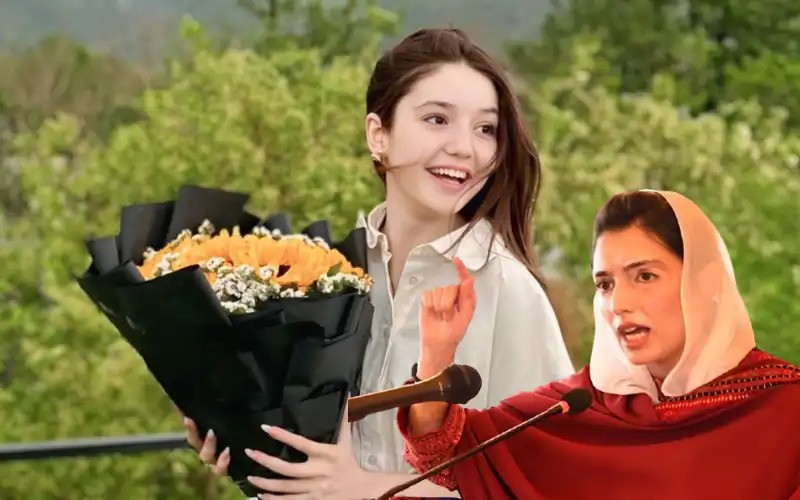
The brutal murder of 16-year-old Sana Yousaf on the eve of her 17th birthday in Islamabad has shattered not just a family, but exposed the ugly truth about how our society treats its daughters. As I write this, my heart weighs heavy with grief for a young life cut short and anger at a system that continues to fail our girls at every turn.
Sana was killed for exercising the most basic human right—the right to say no. She was murdered because she dared to reject someone's advances, because she asserted her autonomy over her own life and choices. In any civilized society, this should be recognized as what it is: cold-blooded murder. Yet, disturbingly, we find ourselves in a nation where some are more interested in dissecting her social media presence than in demanding justice for her death.
In these dark moments, the voice of First Lady and Member of the National Assembly Bibi Aseefa Bhutto Zardari has emerged as a beacon of clarity and moral courage. Her powerful condemnation of Sana's murder cuts through the noise of victim-blaming and social media speculation to address the heart of this tragedy.
"Sana was just a girl—with ambition, with dreams, with a life ahead of her," Bibi Aseefa declared. "She had every right to live freely and safely. What happened to her wasn't just an act of violence—it was a punishment for saying no. And that should horrify every one of us."
These words carry the weight of truth that many in our society seem reluctant to acknowledge. When we strip away the distractions and deflections, we are left with this stark reality: a young woman was killed because she refused to submit to male entitlement. This is not about culture, tradition, or honor—this is about the systematic devaluation of women's lives and choices.
Bibi Aseefa's statement strikes at the root of the problem when she identifies the toxic mindset that treats women's rejection as an insult requiring punishment. This is not a new phenomenon in our society, but it has reached a crisis point where young girls are losing their lives simply for asserting their basic human dignity.
The mentality that a woman's choices need to be controlled, that her rejection is somehow an affront to male honor, represents a dangerous perversion of cultural values. When we examine the teachings of Islam and the cultural heritage of our region, we find respect for women, protection of the vulnerable, and emphasis on justice—not the twisted logic that justifies violence against those who dare to exercise their free will.
As Bibi Aseefa so eloquently put it, "This mindset that a woman's rejection is an insult, that her choices need to be controlled—it's old, it's cruel, and it's killing our daughters." The time for tolerance of this mindset has long passed.
The First Lady's invocation of Shaheed Benazir Bhutto's legacy serves as both inspiration and challenge. Shaheed Benazir Bhutto didn't just break barriers for herself—she opened doors for millions of women to follow. Her life and leadership demonstrated that women could lead, could make decisions, could chart their own course without seeking permission from a patriarchal society.
"My mother, Shaheed Benazir Bhutto, broke those walls with her own strength. She didn't just lead—she opened doors for millions of women to follow. And we owe it to her legacy, and to young women like Sana, to keep those doors open," Bibi Aseefa reminded us.
This is not merely about honoring the past—it is about ensuring that Benazir Bhutto's sacrifice was not in vain. Every time we allow a young woman to be silenced, every time we blame a victim for her own murder, we dishonor that legacy and betray the progress for which she gave her life.
Perhaps most disturbing in the aftermath of Sana's murder has been the wave of online abuse and victim-blaming directed at a dead child. The fact that some have chosen to scrutinize her social media presence, her TikTok videos, and her self-expression as somehow relevant to her murder reveals the depths of our collective moral failure.
Bibi Aseefa's response to this victim-blaming cuts through the hypocrisy with surgical precision: "There is nothing—no app, no photo, no video—that excuses murder. It's disturbing to see people using Sana's TikTok presence to explain away her death. If that's the logic, are we saying millions of girls across Pakistan are also at risk? This kind of thinking is not just dangerous—it's inhumane."
This logic exposes the absurdity of the victim-blaming narrative. If we accept that a young woman's presence on social media justifies her murder, then we are essentially declaring open season on millions of Pakistani girls who use these platforms to express themselves, connect with friends, and participate in modern life. The implications of this thinking are not just morally reprehensible—they are practically genocidal in their scope.
In the face of this tragedy, Bibi Aseefa's message to young women across Pakistan stands as a powerful counter-narrative to the forces of oppression and silence. Her words carry the authority of someone who has witnessed both the cost of progress and the price of retreat.
"To every girl watching this unfold—don't let them silence you. You have the right to dream, to speak, to exist without fear. Don't back down. If you do, they win. But if we keep pushing forward—together—we'll shape a country where girls aren't blamed for their own deaths, but celebrated for their lives."
This is not empty rhetoric—it is a call to resistance against the forces that would reduce our daughters to property, that would silence their voices, and that would punish them for daring to live as free human beings.
As a former MPA and a member of the Pakistan Peoples Party, I have spent my career fighting for the rights of women and marginalized communities. Sana Yousaf's murder is not just a tragedy—it is a test of our society's moral fiber and our commitment to justice.
We cannot allow this young woman's death to be in vain. We cannot permit the narrative to shift from the crime to the victim, from the murderer to the murdered. We must stand with Bibi Aseefa Bhutto Zardari in demanding justice, in condemning the misogyny that enabled this violence, and in working to create a society where our daughters can live without fear.
The path forward requires more than condemnation—it requires action. We need comprehensive legal reforms that treat violence against women with the seriousness it deserves. We need education programs that challenge toxic masculinity and promote respect for women's autonomy. We need social movements that refuse to tolerate victim-blaming and that hold perpetrators accountable for their actions.
Most importantly, we need to listen to the voices of courage like Bibi Aseefa Bhutto Zardari, who refuse to be silenced in the face of tragedy and who continue to speak truth to power even when it is uncomfortable.
Sana Yousaf deserved to see her 17th birthday. She deserved to pursue her dreams, to make her own choices, and to live free from the threat of violence. We failed her in life—we cannot fail her in death. Justice for Sana means justice for all our daughters, and that is a fight we cannot afford to lose.

Sania Kamran is a former Member of Provincial Assembly and Pakistan Peoples Party leader who has advocated for women's rights and social justice throughout her political career.
No comments yet.