
Trump's Peace Initiative Strengthened US-Pakistan Ties
Editorial
By Junaid Qaiser
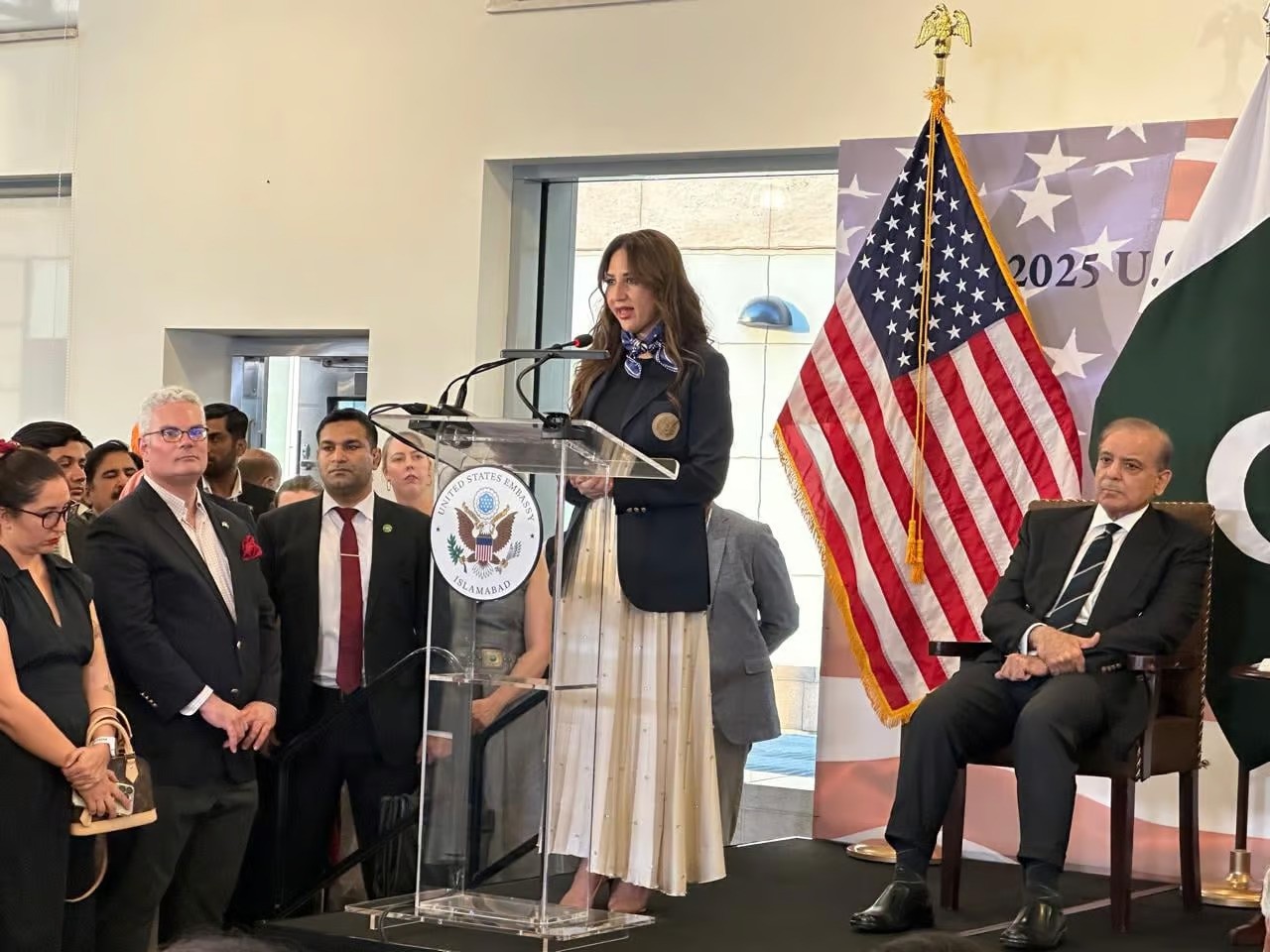
The recent celebration of America's 249th Independence Day at the US Embassy in Islamabad demonstrated something far more significant than diplomatic protocol. When US Chargé d'Affaires Natalie Baker welcomed guests to commemorate this historic milestone, she was actually highlighting a fundamental truth about international relations that often gets overlooked in today's complex geopolitical landscape: genuine partnerships are built on shared values rather than temporary strategic conveniences.
Baker's emphasis on the shared principles of liberty, equality, and self-governance between Pakistan and the United States reveals the deeper philosophical foundation that has sustained this relationship for nearly eight decades. This isn't merely diplomatic courtesy, but rather an acknowledgment that both nations, despite their different historical trajectories, have grappled with similar challenges in building democratic institutions and ensuring representative governance.
To fully appreciate the significance of the current US-Pakistan relationship, we must understand how it has evolved across multiple dimensions of cooperation. Baker's recognition of joint efforts in education, health, and security illustrates what foreign policy experts call "comprehensive partnership" – a relationship that extends far beyond military or economic ties to encompass the fundamental building blocks of societal development.
The military cooperation and counterterrorism efforts she highlighted represent perhaps the most visible aspect of this partnership, particularly given the shared challenges both nations have faced in combating extremism and maintaining regional stability. However, the economic ventures and educational exchanges often prove more transformative in the long term, creating people-to-people connections that outlast changes in political leadership.
The most remarkable aspect of recent developments has been President Donald Trump's role in de-escalating the India-Pakistan military confrontation. Understanding why this intervention proved so effective requires examining both the unique characteristics of Trump's approach to international mediation and the specific dynamics of South Asian geopolitics.
Prime Minister Shehbaz Sharif's characterization of President Trump as "a man for peace" and someone who opposes both "cold and hot war" reflects a pragmatic assessment of Trump's crisis management style. Unlike traditional diplomatic approaches that often rely on lengthy negotiations and formal protocols, Trump's direct intervention helped prevent what could have escalated into a devastating regional conflict between two nuclear-armed nations.
The fact that Trump has publicly taken credit for facilitating the ceasefire on ten different occasions, as noted by PPP Chairman Bilawal Bhutto-Zardari, demonstrates the president's personal investment in this achievement. This level of engagement from the highest office in American government sends a powerful signal about US priorities in South Asia and creates momentum for sustained diplomatic progress.
Baker's applause for Pakistan's role in "facilitating peace between India and Pakistan" and her recognition of the leadership shown by Prime Minister Sharif and Chief of Army Staff Field Marshal Asim Munir reveals an important shift in how Washington views Pakistan's regional role. Rather than seeing Pakistan merely as a partner in counterterrorism or a player in Afghanistan policy, the United States now recognizes Pakistan as a stabilizing force capable of choosing restraint over escalation even under extreme provocation.
This recognition becomes particularly significant when we consider the broader regional context. The recent military confrontation, which Pakistan's leadership has characterized as involving a "false-flag operation" at Pahalgam, tested Pakistan's commitment to peaceful resolution of disputes. The fact that Pakistan offered an "impartial international probe" rather than immediate military retaliation demonstrates the maturity of Pakistani decision-making and validates the trust that international partners like the United States have placed in Pakistan's leadership.
The optimism that Baker expressed about "continued growth in trade, innovation, and diplomatic ties" reflects a sophisticated understanding of how sustainable international partnerships develop. Economic cooperation creates mutual dependencies that make conflict less likely while generating the resources necessary for addressing shared challenges like terrorism, climate change, and regional instability.
The emphasis on innovation is particularly noteworthy because it suggests that the US-Pakistan relationship is evolving beyond traditional patterns of aid and security cooperation toward a more balanced partnership where both nations contribute their respective strengths. Pakistan's growing technology sector, its strategic location connecting South Asia with Central Asia and the Middle East, and its young, educated population all represent assets that can contribute to mutual prosperity.
Baker's celebration of "the US spirit of adventure and resilience" through the country-western theme of the Independence Day festivities might seem like a minor detail, but it actually represents something crucial about successful diplomacy. Cultural exchanges and informal interactions often prove more effective at building lasting relationships than formal negotiations because they create personal connections that transcend political changes.
The presence of Prime Minister Sharif, senior government officials, business leaders, and civil society representatives at this celebration demonstrates the breadth of Pakistani engagement with the United States. This kind of multi-layered relationship, involving not just government officials but also private sector leaders and civil society organizations, creates resilience against political fluctuations and ensures continuity regardless of electoral changes in either country.
The strength of the current US-Pakistan partnership lies not just in what has been accomplished, but in the framework that has been established for addressing future challenges. President Trump's successful mediation has created a precedent for American engagement in South Asian conflicts, while Pakistan's restraint during the recent crisis has demonstrated its reliability as a partner committed to peaceful resolution of disputes.
Baker's concluding remarks about "looking forward to even greater cooperation in the future" should be understood not as diplomatic pleasantries, but as a recognition that the foundation has been laid for a relationship that can weather future storms and contribute to regional stability. The gratitude she expressed to Prime Minister Sharif and Pakistani officials reflects a genuine appreciation for leadership that chose peace over conflict, diplomacy over confrontation.
As both nations move forward, the lessons learned from this recent crisis – the importance of direct presidential engagement, the value of restraint under pressure, and the power of shared democratic values – will serve as guideposts for building an even stronger partnership. The 249th anniversary of American independence thus becomes not just a celebration of historical achievement, but a launching point for a new chapter in US-Pakistan relations built on mutual respect, shared interests, and a common commitment to peace and prosperity in South Asia.
No comments yet.