
PP-52 Sambrial By-Poll Results: A Mirror to PPP's Punjab Predicament
By Junaid Qaiser
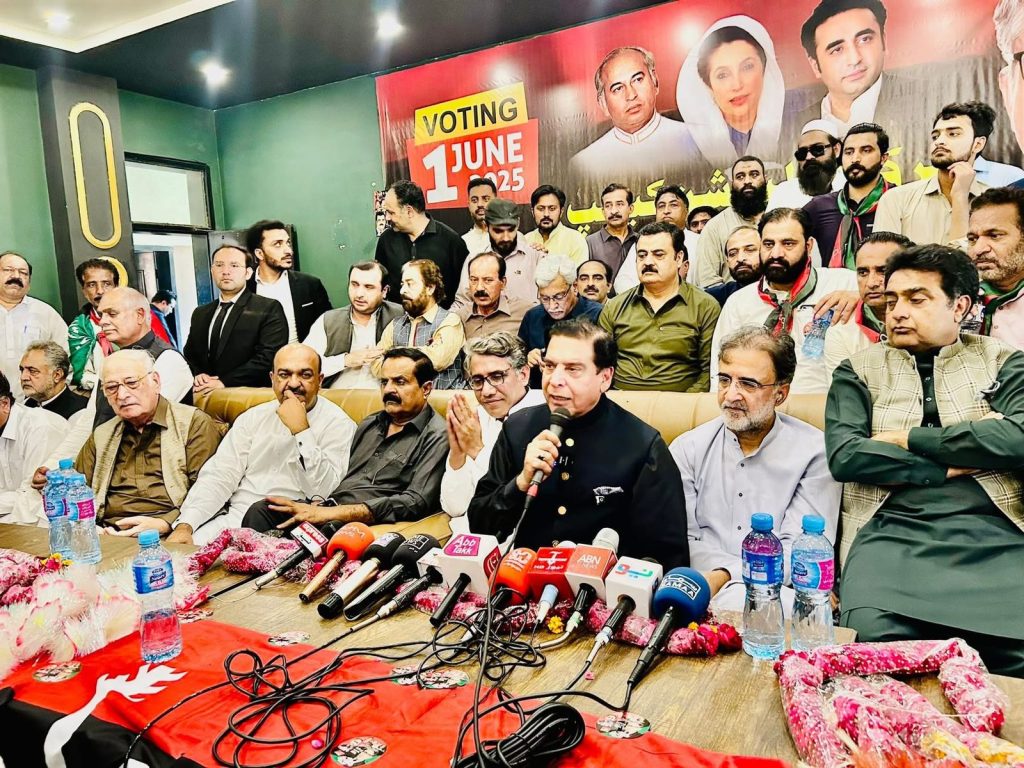
The brutal mathematics of Sambrial's PP-52 by-election reveal a political reality that transcends mere electoral disappointment. When the Pakistan Peoples Party managed only 6,832 votes against the PML-N's commanding 78,419, we witnessed not an upset but the inevitable culmination of decades of institutional decay. To understand why this defeat was so thoroughly predictable, we must examine what these numbers represent in the broader architecture of Pakistani politics.
The scale of this defeat demands careful analysis. Hina Arshad Warraich's margin of victory wasn't simply decisive—it was mathematically devastating, exceeding the PPP's entire vote count by more than eleven to one. This transforms what should have been a competitive three-way race into a binary contest between PML-N and PTI, with the PPP occupying the uncomfortable position of statistical irrelevance. When a party with the PPP's historical gravitas secures less than nine percent of the vote share, we're witnessing something far more profound than campaign failure—we're observing the disintegration of political relevance itself.
At the core of PPP's Punjab predicament lies what can only be described as the tyranny of familiar faces. For over two decades, the same cadre of leaders has dominated the party's Central Punjab apparatus, their tenure stretching back to the era of Shaheed Benazir Bhutto. These political fossils, once perhaps relevant, have become symbols of institutional inertia rather than dynamic leadership.
Central Punjab's Pakistan People's Party faces a crisis that runs deeper than electoral defeats. The party continues to rely on the same leadership faces that have remained unchanged since Shaheed Benazir Bhutto's era. This creates a fundamental disconnect between the party and the electorate it seeks to serve.
The problem becomes clear when we consider this reality: if the PPP's own committed supporters have grown tired of seeing these same leaders, how can these figures possibly energizeyoung voters who remain undecided or support other parties? The issue extends beyond simple familiarity. These leaders have become symbols of political stagnation rather than progress, making it nearly impossible for the party to present itself as a force for change.
Perhaps most significantly, the PPP is losing ground in an area where it once led: empowering women in politics. This represents both a strategic failure and a missed opportunity that becomes starkly apparent when comparing the party to its main rival.
The Pakistan Muslim League-Nawaz has built a strong roster of prominent women leaders who serve as effective communicators and mobilizers. Maryam Nawaz Sharif leads major initiatives, Maryam Aurangzeb articulates government positions, Uzma Bukhari commands media attention, and young ladies like Hina Pervez Butt represents the party across multiple platforms. These women aren't token appointments - they form the backbone of PML-N's communication strategy.
The path forward demands nothing less than architectural transformation. One cannot construct a modern edifice upon rotting foundations, and the PPP's current Central Punjab structure represents precisely such decay. The party requires complete organizational overhaul—a systematic dismantling of ossified hierarchies and their replacement with vibrant, contemporary leadership.
This reconstruction must begin with the information and communication apparatus. While narrative remains crucial in contemporary politics, the messengers matter equally, if not more. The current spokespersons and media representatives have become counterproductive assets, their very presence on television screens prompting channel changes rather than engagement. The communication crisis in Central Punjab demands immediate action. The party must completely replace its current media representatives and spokespersons with fresh, credible young faces particularly women who can genuinely attract new voters.
The PPP possesses educated, capable women within its ranks, yet persists in sidelining them in favor of tired old male hierarchies. This represents not merely missed opportunity but strategic incompetence. In an evolving political landscape where representation matters as much as narrative, the party's reluctance to elevate women leaders in central Punjab as spokespersons reflects broader institutional sclerosis.
The Sambrial results offer more than statistical embarrassment—they provide diagnostic clarity. When a party of the PPP's historical significance struggles to breach single-digit vote shares in crucial constituencies, the problem transcends campaign tactics or candidate selection. It speaks to fundamental disconnection between party machinery and contemporary political currents.
Sambrial's disappointing outcome presents PPP leadership with an uncomfortable but necessary moment of introspection. The choice is binary: acknowledge the depth of institutional failure and undertake genuine reconstruction, or continue inhabiting the comfortable delusion that cosmetic adjustments might suffice.
The party must confront uncomfortable truths about its Punjab operations. The current leadership structure, communication strategy, and representational framework have failed comprehensively. Half-measures and superficial rebranding will prove insufficient when the fundamental architecture requires rebuilding.
The Sambrial verdict was always written in the stars—not through divine predestination but through political logic. When parties sow stagnation, they reap irrelevance. The PPP's challenge now lies not in explaining away this defeat but in demonstrating whether it possesses the institutional courage to learn from it.
The clock is ticking, and the electorate's patience has already expired. Whether the PPP chooses renewal or continued decline will determine not just future electoral prospects but the party's very survival in Punjab's competitive political landscape.
Agreed with you
Defiantly I totally agree with the editor Party leaderahip should produce or bring forward young leadership at the local level including women۔ Although it was written on the wall that pp52 seat will go to PMLn but efforts should be made to increase voters۔