
Pakistan Takes Historic Step Against Child Marriage with New Federal Legislation
By Junaid Qaiser
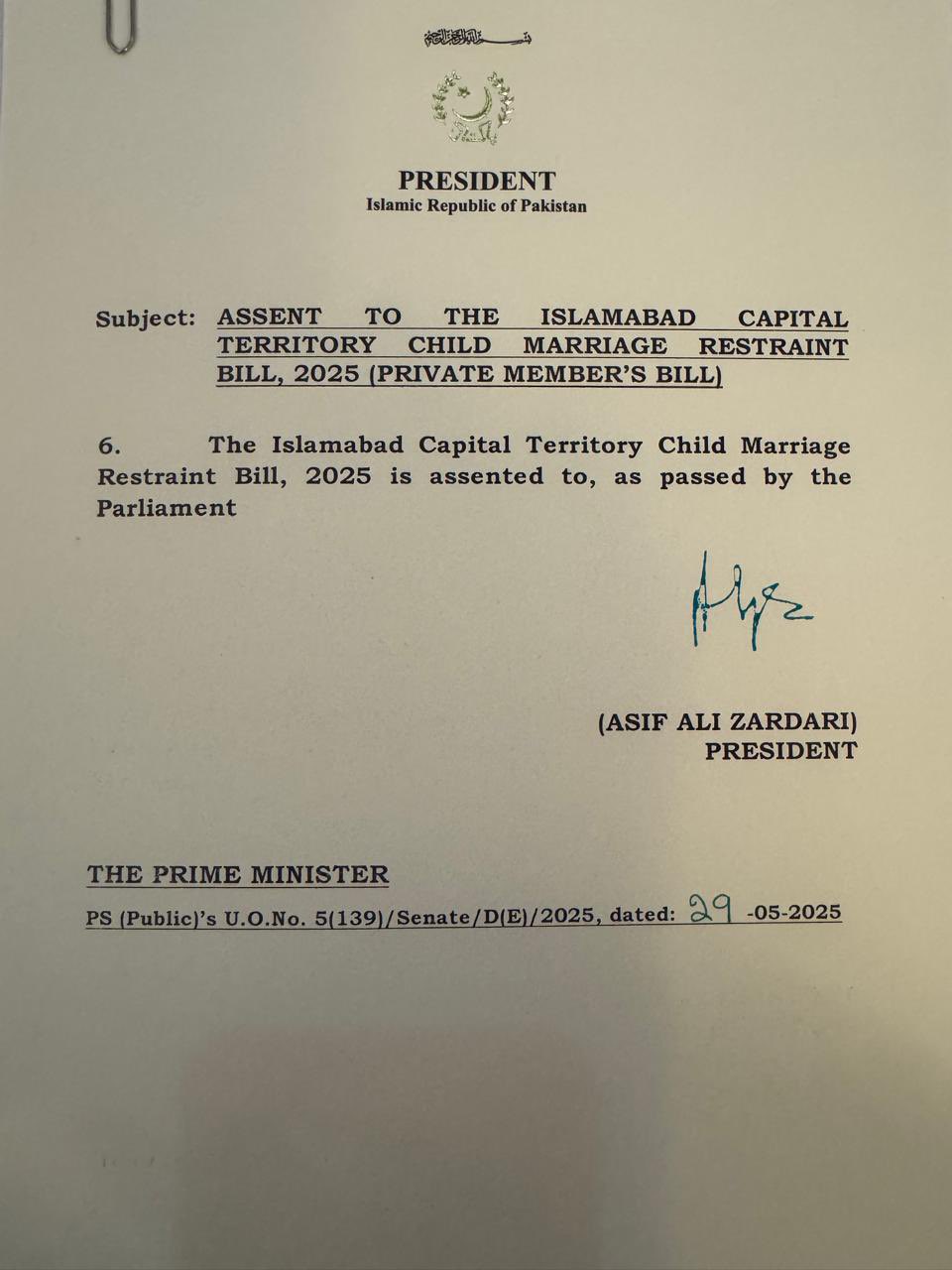
ISLAMABAD - In a landmark achievement for child protection rights in Pakistan, President Asif Ali Zardari has signed the Islamabad Capital Territory Child Marriage Restraint Bill, 2025 into law, marking a significant milestone in the country's ongoing efforts to safeguard children from harmful traditional practices.
The legislation, which establishes 18 as the minimum age for marriage in the federal capital, represents the culmination of years of advocacy by the Pakistan People's Party and demonstrates the government's commitment to aligning national laws with international human rights standards.
To fully appreciate the importance of this development, it's essential to understand the broader context of child marriage in Pakistan and why this legislation represents such a crucial step forward. Child marriage has long been a complex social issue in Pakistan, often rooted in economic pressures, cultural traditions, and misconceptions about religious requirements. The new law specifically targets these harmful practices by creating clear legal boundaries and consequences.
Senator Sherry Rehman, PPP Vice President, characterized the signing as "a landmark moment in Pakistan's legislative history," emphasizing that this achievement came despite significant resistance from various quarters. Her statement reveals the political courage required to push through such reforms, particularly in a society where traditional practices often clash with modern human rights principles.
The urgency behind this legislation becomes clear when examining the devastating statistics that motivated its passage. According to the UNFPA Annual Report 2024, which Senator Rehman cited, every 50 minutes a woman in Pakistan dies from complications related to pregnancy or childbirth. This sobering figure gains additional weight when considering that many of these deaths are directly linked to underage marriages, where young girls lack any agency over their health, nutrition, or reproductive choices.
Senator Rehman's powerful observation that "girls under the age of 18, when married off, often die during childbirth" and her reference to "silent funerals" paints a stark picture of the human tragedy this legislation aims to prevent. These aren't merely statistics—they represent young lives cut short by practices that rob children of their fundamental right to childhood, education, and healthy development.
The legislation's supporters have made compelling arguments about legal consistency that help explain why setting 18 as the minimum marriage age makes constitutional sense. Senator Rehman posed a particularly thought-provoking question: "A person under the age of 18 is not even granted a driving licence, how is it possible to allow them to get married?"
This comparison illuminates a fundamental inconsistency in how Pakistani law traditionally treated children's capabilities. The Juvenile Justice System Act of 2018 already defines anyone under 18 as a "juvenile" who cannot be held to the same legal standards as adults when committing crimes. This established legal precedent makes it logically inconsistent to simultaneously consider someone under 18 mature enough for marriage, which involves far more complex emotional, physical, and financial responsibilities than driving.
Understanding the political journey behind this legislation helps explain why its passage represents more than just a single policy victory. This was fundamentally a Pakistan People's Party initiative, with Senator Rehman acknowledging the sustained efforts of multiple party leaders across both houses of Parliament.
The legislative process involved careful coordination between Senator Sehar Kamran, who first introduced the bill in the Senate, and MNA Sharmila Faruqi, who carried it forward in the National Assembly. This collaborative approach demonstrates how complex social reforms require sustained institutional commitment rather than individual heroics.
Dr. Sharmila Faruqi's response to the bill's signing particularly emphasized its connection to the PPP's historical legacy, describing it as reflecting "the enduring vision of Shaheed Mohtarma Benazir Bhutto, whose legacy of championing women's empowerment and children's rights continues to shape Pakistan's path forward."
The new law serves a dual purpose: protecting Pakistani children while bringing the country's legal framework into alignment with international commitments, including the UN Convention on the Rights of the Child and the Sustainable Development Goals. This alignment matters because it demonstrates Pakistan's commitment to global human rights standards and could potentially influence similar legislation in other provinces.
However, it's important to understand that this law currently applies only to Islamabad Capital Territory, which means the fight for comprehensive child protection continues across Pakistan's other provinces. The federal nature of Pakistan's system means that each province must pass its own version of such legislation for truly nationwide protection.
Dr. Faruqi's statement that this legislation sends "a message to every girl in Pakistan: your rights matter, your childhood matters, and the state stands with you" captures the broader symbolic importance of this achievement. While the immediate legal impact affects only Islamabad residents, the precedent and political momentum created could catalyze similar reforms across the country.
The success of this legislation demonstrates that sustained advocacy, combined with political will at the highest levels, can overcome entrenched resistance to necessary social reforms. President Zardari's decision to sign the bill, despite acknowledged opposition, signals that Pakistan's leadership recognizes the urgent need to protect its most vulnerable citizens.
This landmark legislation represents not just a legal victory, but a moral statement about the kind of society Pakistan aspires to become—one where children's rights are protected, where traditional practices yield to human dignity, and where the state actively safeguards those who cannot protect themselves.
No comments yet.