
From Vatican to Moscow: Gilani's Strategic Diplomacy Reshapes Pakistan's Global Role
By Sania Kamran Former MPA Punjab and Pakistan Peoples Party Leader
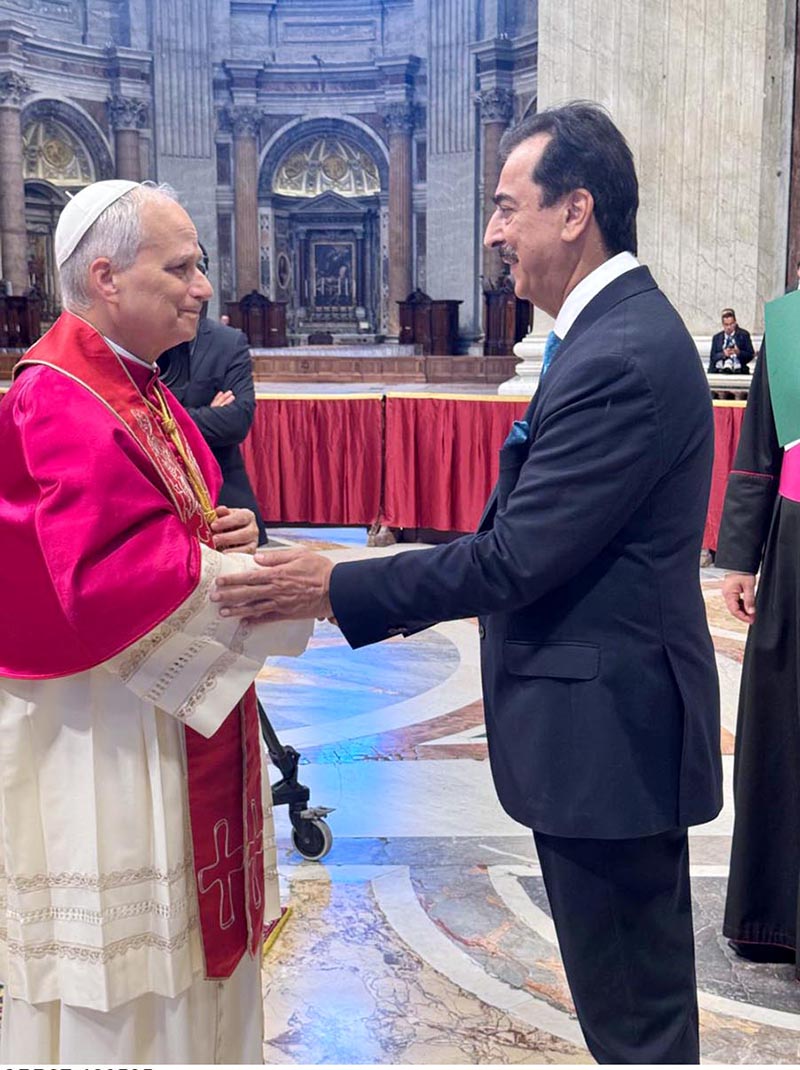

In today's polarized world where substance too often succumbs to spectacle, Chairman Senate Syed Yousuf Raza Gilani emerges as the embodiment of Pakistan's steadfast dedication to dignified diplomacy. His masterful orchestration of international engagements—whether gracing the sacred chambers of the Vatican or navigating the strategic halls of Moscow—reveals far more than mere diplomatic skill. These encounters showcase a statesman possessed of that rare quality: the ability to transform individual meetings into building blocks of national prestige, methodically constructing Pakistan's reputation as a reliable partner in an era of mounting global uncertainty.
The image of Chairman Gilani meeting His Holiness Pope Leo XIV during the Solemn Mass at the Vatican represents more than ceremonial diplomacy; it embodies Pakistan's unwavering dedication to interfaith harmony and global peace. In that moment of reverence, as he conveyed Pakistan's message of solidarity with the Christian community worldwide, Gilani transcended the role of a mere representative to become an ambassador of our nation's deepest values. His graceful interaction with His Grace Archbishop Edgar Peña Parra, the Deputy Secretary of State of the Holy See, further underscored the sophistication with which he navigates the delicate terrain of international relations.
What strikes one most profoundly about Gilani's Vatican engagement is his ability to weave Pakistan's contemporary challenges into a broader narrative of hope and reconciliation. When he expressed gratitude for His Holiness's constructive remarks regarding the recent tensions between India and Pakistan, he demonstrated the rare diplomatic skill of transforming external validation into domestic strength. His acknowledgment of Pakistan's decades-long struggle against terrorism, coupled with our humanitarian burden of hosting 3.5 million Afghan refugees since 1988, painted a picture of a nation that seeks peace not from a position of weakness, but from the moral authority that comes with having borne immense sacrifices for regional stability.
The Chairman's recent official visit to Moscow reveals another dimension of his diplomatic prowess. In an age where geopolitical alignments shift like desert sands, Gilani's engagement with Valentina Matviyenko, chairperson of the Federation Council of the Russian Federation, represents a masterclass in strategic patience and pragmatic partnership building. The transformation of Pakistan-Russia relations from Cold War rivalry to contemporary cooperation speaks to the kind of long-term vision that has always distinguished Gilani's approach to international affairs.

His discussions focusing on parliamentary exchanges, trade cooperation, and collaboration in energy and regional connectivity demonstrate an understanding that modern diplomacy must be anchored in concrete benefits for the people we serve. When he highlighted Pakistan's successful foreign policy initiatives under the current government, he was not merely offering praise but providing a roadmap for how nations can enhance their global standing through consistent, principled engagement.

Perhaps most compelling is Gilani's recent initiative in establishing the "Inter-Parliamentary Speakers Conference" and his engagement with African nations on Pak-Africa Friendship Day. These endeavors reveal a statesman who thinks beyond traditional bilateral relationships to embrace multilateral frameworks that can amplify Pakistan's voice in global affairs. His vision of "dynamic, effective, and equal partnership with Africa, based on mutual benefit, respect, and shared aspirations" reflects the kind of inclusive diplomacy that Pakistan needs as it navigates the challenges of the 21st century.

Throughout these engagements, Chairman Gilani has consistently articulated Pakistan's fundamental positions with both clarity and nuance. His firm stance against terrorism in all its forms, coupled with his advocacy for dialogue over conflict, positions Pakistan as a mature democracy committed to peaceful resolution of disputes. When he praised the Pakistan Armed Forces for their measured response during recent tensions with India, he struck the perfect balance between national pride and restraint—acknowledging strength while emphasizing our preference for diplomatic solutions.
The Chairman's diplomatic momentum continued seamlessly with his recent arrival in Ashgabat, where he received a warm welcome for his official visit to Turkmenistan. This latest engagement exemplifies the methodical approach that characterizes Gilani's international outreach strategy. His significant meeting with G. Rozuew, Deputy Chairman of the Mejlis of Turkmenistan, along with other high-level parliamentary leaders, demonstrates his understanding that sustainable diplomatic relationships must be built through consistent institutional engagement rather than sporadic high-profile encounters.
The comprehensive nature of discussions during his Turkmenistan visit—spanning trade, energy, information technology, tourism, and culture—reveals the holistic vision that drives Gilani's diplomatic agenda. When he emphasized that bilateral relations between Pakistan and Turkmenistan are "growing stronger with time," he articulated a philosophy that views diplomacy as cultivation rather than transaction. The presence of a distinguished parliamentary delegation including Senator Hidayatullah Khan, Senator Jan Muhammad, Senator Syed Waqar Mehdi, and Advisor Yahya Hussain Shah underscores the institutional depth he brings to international engagement.

Perhaps most compelling is how this Turkmenistan initiative connects with Gilani's broader efforts, including his establishment of the "Inter-Parliamentary Speakers Conference" and his engagement with African nations on Pak-Africa Friendship Day. These endeavors reveal a statesman who thinks beyond traditional bilateral relationships to embrace multilateral frameworks that can amplify Pakistan's voice in global affairs. His vision of "dynamic, effective, and equal partnership with Africa, based on mutual benefit, respect, and shared aspirations" reflects the kind of inclusive diplomacy that Pakistan needs as it navigates the challenges of the 21st century.
Throughout these engagements, Chairman Gilani has consistently articulated Pakistan's fundamental positions with both clarity and nuance. His firm stance against terrorism in all its forms, coupled with his advocacy for dialogue over conflict, positions Pakistan as a mature democracy committed to peaceful resolution of disputes. When he praised the Pakistan Armed Forces for their measured response during recent tensions with India, he struck the perfect balance between national pride and restraint—acknowledging strength while emphasizing our preference for diplomatic solutions.
The genius of Gilani's diplomatic approach lies in his ability to present Pakistan not as a nation seeking validation, but as one offering partnership. Whether addressing the Vatican's concerns about regional peace, exploring energy cooperation with Russia, or strengthening parliamentary ties with African nations, he consistently positions Pakistan as a contributing member of the international community rather than a supplicant seeking assistance.
As someone who has observed Pakistan's political landscape for decades, I find in Chairman Gilani's recent diplomatic initiatives a reminder of what Pakistani leadership can achieve when it combines experience with vision, tradition with innovation. His engagements represent more than successful meetings; they constitute a sustained effort to rebuild Pakistan's image as a responsible, peace-loving nation committed to the welfare of its people and the stability of its region.
In Yousuf Raza Gilani, Pakistan possesses not merely a skilled politician but a true statesman whose diplomatic touch continues to open doors and build bridges in service of our national interests. His recent initiatives stand as testament to the enduring power of principled diplomacy in an often unprincipled world.
No comments yet.