
National Interest Above Politics: Bilawal Bhutto Zardari's Diplomatic Leadership
Editorial
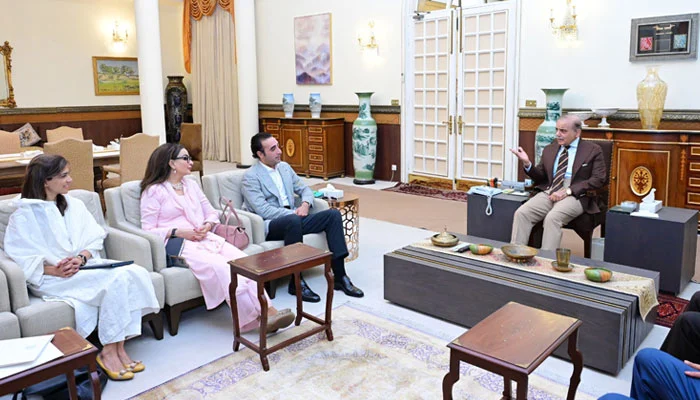
The significance of youth leadership in Pakistan's political history has never been as evident as it is in today's era. Chairman Pakistan Peoples Party Bilawal Bhutto Zardari's recent meeting with Prime Minister Shehbaz Sharif serves as clear evidence of how political leaders rise above the distinctions between opposition and government when national interests are at stake, prioritizing the country's needs above partisan considerations.
The meeting between the delegation led by Pakistan Peoples Party Chairman Bilawal Bhutto Zardari and Prime Minister Shehbaz Sharif reflects not only political harmony but also serves as a banner for collective struggle in protecting national interests. This meeting holds historical significance as both leaderships discussed regional security, Pakistan's foreign relations, and paved the way for an effective global campaign against Indian aggression. The maturity and political awareness demonstrated by Chairman Bilawal Bhutto Zardari while seeking guidance from the Prime Minister stands as living proof of Pakistan's diplomatic capabilities under the new generation's leadership.
The manner in which Bilawal Bhutto Zardari has accepted national diplomatic responsibilities and prepared to present Pakistan's position in the world's major capitals is compelling evidence of his political insight and national thinking. This initiative by Bilawal Bhutto Zardari is particularly commendable because he has undertaken the responsibility of opening a global front against Indian propaganda. In an era when information warfare and propaganda have become far more important than traditional military strategies, the role of an experienced and capable leader becomes extremely crucial.
Understanding the strategic thinking behind this diplomatic mission requires examining the composition of the delegation that Bilawal Bhutto Zardari has assembled. The selection of experienced and capable personalities like Dr. Musaddiq Malik, Khurram Dastgir, Sherry Rehman, Hina Rabbani Khar, Faisal Sabzwari, Tahmeena Janjua, and Jalil Abbas Jilani demonstrates the seriousness with which this campaign has been prepared. Each of these individuals brings unique expertise to the mission - from diplomatic experience to international relations knowledge to media engagement skills.
The cities this delegation will visit represent the epicenters of global politics. Presenting Pakistan's position and countering Indian propaganda in London, Washington, Paris, and Brussels is an extremely challenging task that requires not only deep preparation but also high-level diplomatic skills. These capitals house the decision-making centers of major international organizations, influential think tanks, and global media outlets that shape international opinion. Successfully engaging with these audiences requires understanding their specific concerns, communication styles, and decision-making processes.
The distinctive feature of Bilawal Bhutto Zardari's diplomatic leadership lies in the fact that he is not merely presenting his party's perspective but has emerged as the voice of the entire nation. This transformation from party leader to national spokesperson represents a maturation of political thinking that is essential for effective international diplomacy. This is precisely why Prime Minister Shehbaz Sharif expressed confidence in him and hoped that under his leadership, the delegation would present Pakistan's position comprehensively to the world.
What deserves the highest praise in this entire situation is that Bilawal Bhutto Zardari has subordinated his personal and party politics to the national interest. This is a role that only true national leaders can play, requiring the ability to see beyond immediate political gains and focus on long-term national benefits. Such leadership becomes particularly valuable when a country faces complex challenges that require unified national responses rather than fragmented partisan approaches.
The strategic importance of this diplomatic initiative becomes clearer when we consider the current international landscape. In an era dominated by social media and rapid information dissemination, narrative-building and counter-narrative efforts can significantly influence international opinion and policy decisions. Bilawal Bhutto Zardari's understanding of this modern diplomatic reality is evident in his approach to this mission.
The delegation's planned activities in these major capitals will likely include meetings with government officials, parliamentarians, think tank experts, media representatives, and diaspora communities. Each audience requires tailored messaging that resonates with their specific interests and concerns while maintaining consistency with Pakistan's overall narrative. This multifaceted approach demonstrates sophisticated understanding of modern diplomatic engagement.
In the face of the internal and external challenges Pakistan confronts today, Bilawal Bhutto Zardari's leadership represents a beacon of hope. His initiative proves that the younger generation possesses the capability to secure Pakistan's rightful place on the global stage. This leadership approach combines traditional diplomatic wisdom with contemporary communication strategies, potentially creating more effective international engagement.
The success of this diplomatic mission and the effective presentation of Pakistan's position to the world is not only in the country's interest but is also extremely necessary for regional peace and stability. The interconnected nature of regional challenges means that Pakistan's ability to articulate its position internationally has implications beyond bilateral relations, potentially influencing broader security and economic cooperation frameworks.
Bilawal Bhutto Zardari's judicious leadership raises expectations that Pakistan will be able to present its position to the world in a more effective manner. His approach demonstrates that effective diplomacy in the modern era requires combining traditional statecraft with innovative communication strategies, building coalitions across political divides, and maintaining focus on long-term national interests rather than short-term political gains.
This diplomatic initiative represents more than just a response to immediate challenges; it signals a new approach to Pakistan's international engagement that could establish precedents for future diplomatic efforts. The success of this mission could demonstrate the effectiveness of bipartisan cooperation in foreign policy matters, potentially creating a model for addressing other national challenges through unified political leadership.
No comments yet.