
Editorial: President Zardari’s Defiant Leadership Reaffirms National Resolve Amid Regional Tensions
“We take pride in the bravery of our soldiers and the sacrifices of our people. The entire nation salutes their patriotism.”
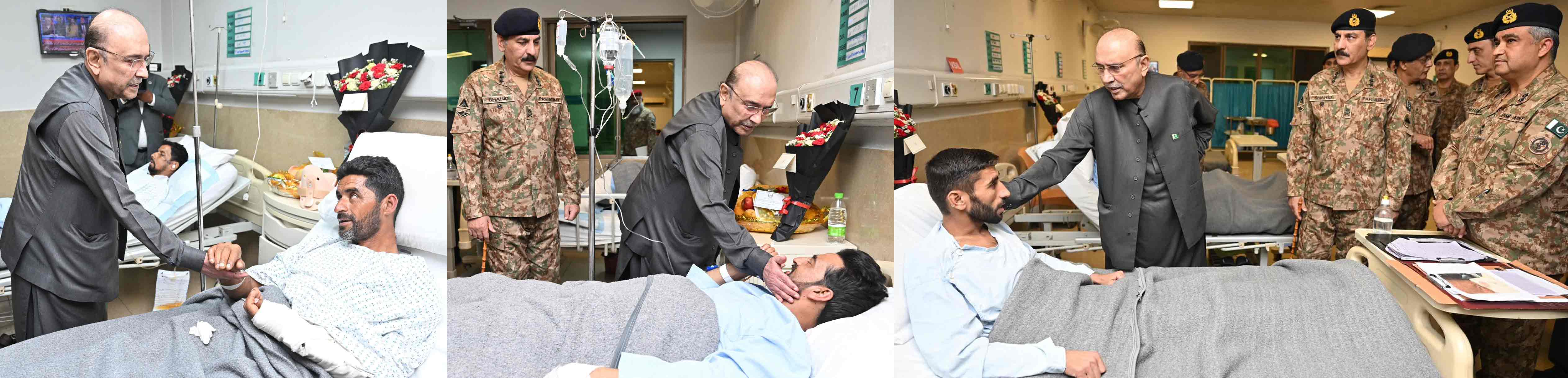
President Asif Ali Zardari’s recent visit to the Combined Military Hospital (CMH) Rawalpindi stands as a powerful testament to his steadfast leadership and unwavering commitment to Pakistan’s security and unity. Against the backdrop of escalating regional tensions, the President’s gesture of solidarity with soldiers and civilians injured in unprovoked Indian aggression underscores his role as a compassionate commander-in-chief and a unifying national figure.
Key Highlights of the Visit:
-
Symbolic Solidarity with the Injured:
President Zardari’s decision to personally meet each injured soldier and civilian, presenting them with gifts and flowers, reflects his hands-on leadership style. By acknowledging their sacrifices, he reinforced the bond between the state and its citizens, declaring, “We take pride in the bravery of our soldiers and the sacrifices of our people. The entire nation salutes their patriotism.” Such gestures amplify morale and national pride. -
Unflinching Stance Against Indian Aggression:
The President’s unequivocal condemnation of India’s “aggressive and extremist posture” highlighted his strategic clarity. He accused the Modi government of exploiting hostility for political gains but asserted, “Pakistan will not allow any harm to its sovereignty or national security.” His resolute message—“Pakistan possesses the capability to decisively counter any aggression”—reassured the nation of its defensive readiness. -
Emphasis on National Unity and Resilience:
Zardari’s remarks, “Confronting the enemy’s aggression is our national tradition… Pakistan remains united, determined, and vigilant,” resonated as a call for cohesion. His leadership shines in transforming adversity into a rallying point for collective resolve, reinforcing Pakistan’s identity as a nation that stands undivided in the face of challenges. -
Recognition of Healthcare Heroes:
The President’s gratitude toward CMH’s doctors, nurses, and staff for their “exceptional care and professionalism” showcased his holistic approach to leadership. By applauding both frontline defenders and their caregivers, he highlighted the interconnected efforts that sustain national resilience.
Leadership Praised: A Beacon in Turbulent Times
President Zardari’s visit was not merely symbolic but a strategic demonstration of resolve during a volatile period. His ability to balance empathy with authority—comforting the injured while issuing a stern warning to adversaries—exemplifies his nuanced statesmanship. By uniting political, military, and civilian stakeholders during the visit (including Federal Interior Minister Mohsin Raza Naqvi and 10 Corps Commander), he projected a united national front.
Critically, his sharp critique of India’s destabilizing actions reaffirmed Pakistan’s stance as a advocate for regional peace, while his confidence in the military’s capabilities bolstered public trust. This visit will be remembered as a defining moment where leadership, compassion, and patriotism converged to uplift the nation.
Conclusion: A Message Beyond Borders
In an era where hybrid warfare and psychological tactics dominate, President Zardari’s actions send a clear message: Pakistan’s spirit remains unbroken. His leadership—marked by courage, compassion, and clarity—has not only honored the sacrifices of the brave but also rekindled the nation’s resolve to safeguard its sovereignty. As tensions simmer, the President’s visit to CMH Rawalpindi will stand as a milestone in Pakistan’s narrative of resilience, guided by a leader who leads from the front.
President Zardari’s exemplary leadership reaffirms that in unity and determination, Pakistan’s future remains secure. 🇵🇰
No comments yet.