
The Politics of Procrastination: How Committees Become the Graveyard of Action
In the political theater of Pakistan, the formation of committees has long been a time-honored tactic—often less about action and more about optics.
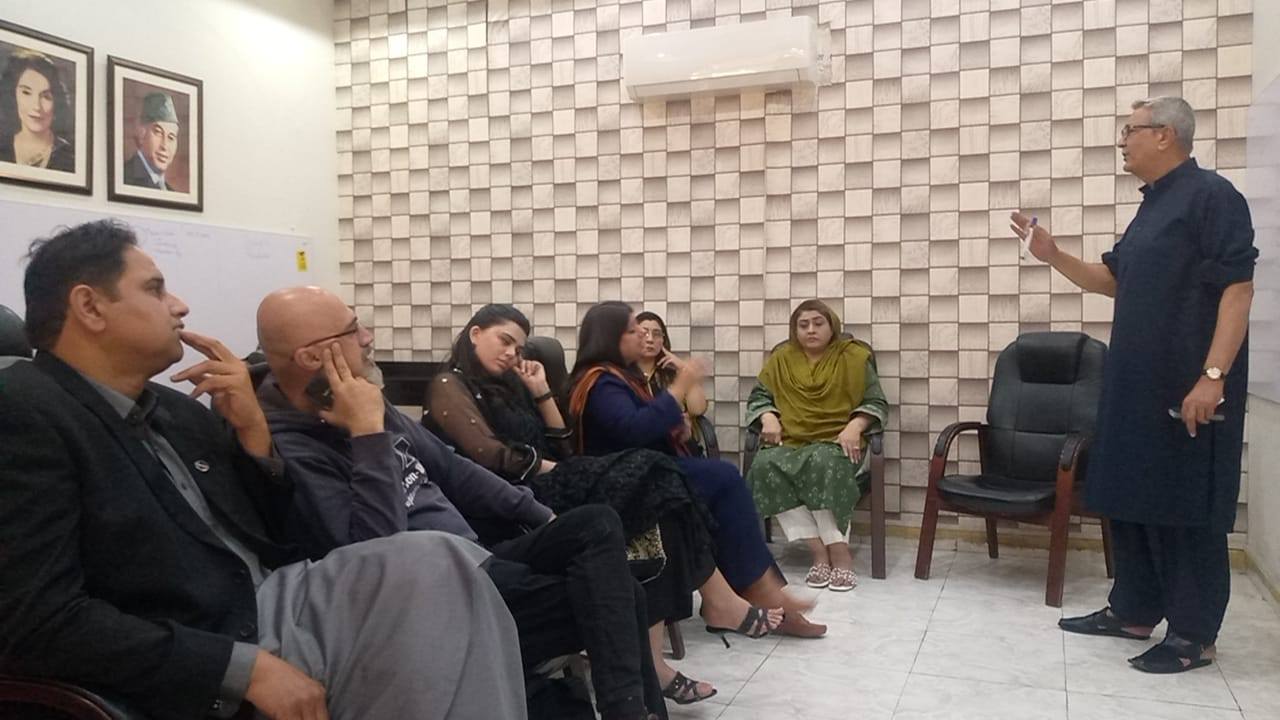
In the political theater of Pakistan, the formation of committees has long been a time-honored tactic—often less about action and more about optics. The PPP seems ensnared in this very cycle in Central Punjab. The Information Bureau, envisioned as a linchpin for the party's communication strategy, has become emblematic of this inertia.
By Junaid Qaiser
In the labyrinthine world of Pakistani politics, there exists an unspoken tradition, a well-worn path trodden whenever meaningful action is to be avoided: form a committee. This venerable method of institutional procrastination has once again manifested itself in the saga of the PPP Information Bureau in Central Punjab, where meetings multiply while accomplishments remain conspicuously absent.
The spectacle unfolds with predictable precision. Lengthy deliberations occur behind closed doors, minutes are recorded, and participants nod solemnly. Yet when one searches for tangible outcomes—a coherent vision, a strategic framework, actionable initiatives—the landscape remains barren. The bureaucratic machinery spins impressively while producing nothing of substance.
In recent days, we witnessed the latest act in this familiar drama: a colorful HD notification announcing the formation of not one, but several committees, encompassing fifty to sixty individuals. The document, resplendent in its official formatting and comprehensive member listings, revealed itself immediately as what it truly was—a performance of productivity rather than productivity itself. It betrayed, in its very composition, a fundamental misunderstanding of modern media dynamics and effective communication strategies. It was, in essence, an exercise in filing, not fulfilling.
Conversations with numerous appointees to these committees confirmed what was already evident: these structures exist not to facilitate action but to forestall it. The consensus among these reluctant participants echoes a single sentiment—futility. They recognize the pattern, having seen it play out countless times before.
This observation is not without precedent. In a previous analysis of the Information Bureau's operation, we highlighted the twin deficiencies undermining its effectiveness: a pervasive lack of seriousness and an absence of continuity. Time has passed, but these fundamental flaws remain uncorrected.
Related Article: Discontinuity and Personal Ambition Over Party Progress: The Root Causes of the PPP's Information Bureau's Stagnation
The evolution—or perhaps more accurately, the devolution—of the Pakistan People's Party's communication apparatus offers a compelling chronicle of institutional weakness. What began as a social media initiative transformed into an Information Bureau, then a digital media department, only to cycle back again. This organizational restlessness illustrates profound lessons about sustainability within political structures, where promising initiatives launch with fanfare only to collapse under the weight of internal rivalries and waning commitment.
Despite acknowledging the transformative power of social media in contemporary political discourse, the party has repeatedly failed to embrace it fully, a reluctance that symbolizes a broader pattern of institutional hesitation when confronted with necessary evolution.
In Central Punjab, where the party's media presence has atrophied to near invisibility, hope rests singularly on the shoulders of Nadeem Afzal Chan. His experience and vision represent perhaps the last opportunity to revitalize the party's communication strategy in this crucial region. His recently announced "Information Strategy and Policy Wing," designed to rebuild the Bureau throughout Punjab down to the tehsil level, addresses long-standing institutional deficiencies that have plagued the party's messaging apparatus.
Related Article: From Press Release to Podcast and Tehsil to Twitter: How Chan Plans to Transform PPP Communications
What distinguishes Chan from his predecessors is his rare combination of traditional political acumen and contemporary communication sensibility. Rooted in Central Punjab—territory where the party has struggled to maintain relevance—he demonstrates an understanding that effective political communication in the digital age requires both technological infrastructure and human capital development.
His approach suggests a holistic vision, emphasizing both physical resources and talent cultivation. This stands in marked contrast to previous leadership transitions, which invariably prioritized personal advancement over institutional effectiveness.
The stakes could not be higher. In Pakistan's increasingly fragmented media landscape, political organizations can no longer rely on controlling traditional channels through patronage alone. The battle for public opinion unfolds in the digital sphere, where content quality and responsiveness determine success or failure.
Political parties that cannot establish robust, transparent, and adaptively evolving information systems face not merely diminished influence but eventual irrelevance. The PPP's latest attempt at communication renaissance offers a glimmer of possibility that one of Pakistan's most historic political institutions might yet adapt to this reality—if, and only if, its leadership can sustain commitment beyond ceremonial announcements and construct frameworks that prioritize institutional integrity over individual ambition.
The PPP's communication struggles represent more than just organizational failure—they signify a fundamental democratic shortcoming in our digital age, where effective discourse has become the lifeblood of political relevance. Central Punjab, historically a crucible of Pakistani political thought and action, now experiences a profound narrative vacuum where robust political dialogue should flourish.
The region's citizens deserve meaningful engagement and representation in the national conversation, yet instead encounter only sporadic messaging without coherent strategy or sustained presence. This void not only undermines the party's electoral prospects but erodes the quality of democratic participation itself.
Whether Nadeem Afzal Chan can revitalize this communication landscape remains an open question. His experience and vision offer genuine promise, but Pakistan's political history provides sobering context: ambitious beginnings frequently dissolve into institutional amnesia and abandoned initiatives. The path from bold announcements to institutional transformation is littered with the artifacts of previous reinvention attempts, each initially heralded with similar optimism.
The Information Bureau's trajectory now stands as a microcosm of the PPP's broader challenge—can the party transcend its cycle of reinvention and dissolution to establish lasting institutional frameworks? The answer will determine not just the Bureau's effectiveness but potentially the party's continued relevance in a political landscape increasingly defined by digital communication competence. Success demands not merely visionary leadership in this moment, but sustained commitment through inevitable challenges and transitions.
Until then, we watch as committees meet, notifications circulate, and the essential work of effective political communication remains undone.

No comments yet.